
Last updated October 15, 2026
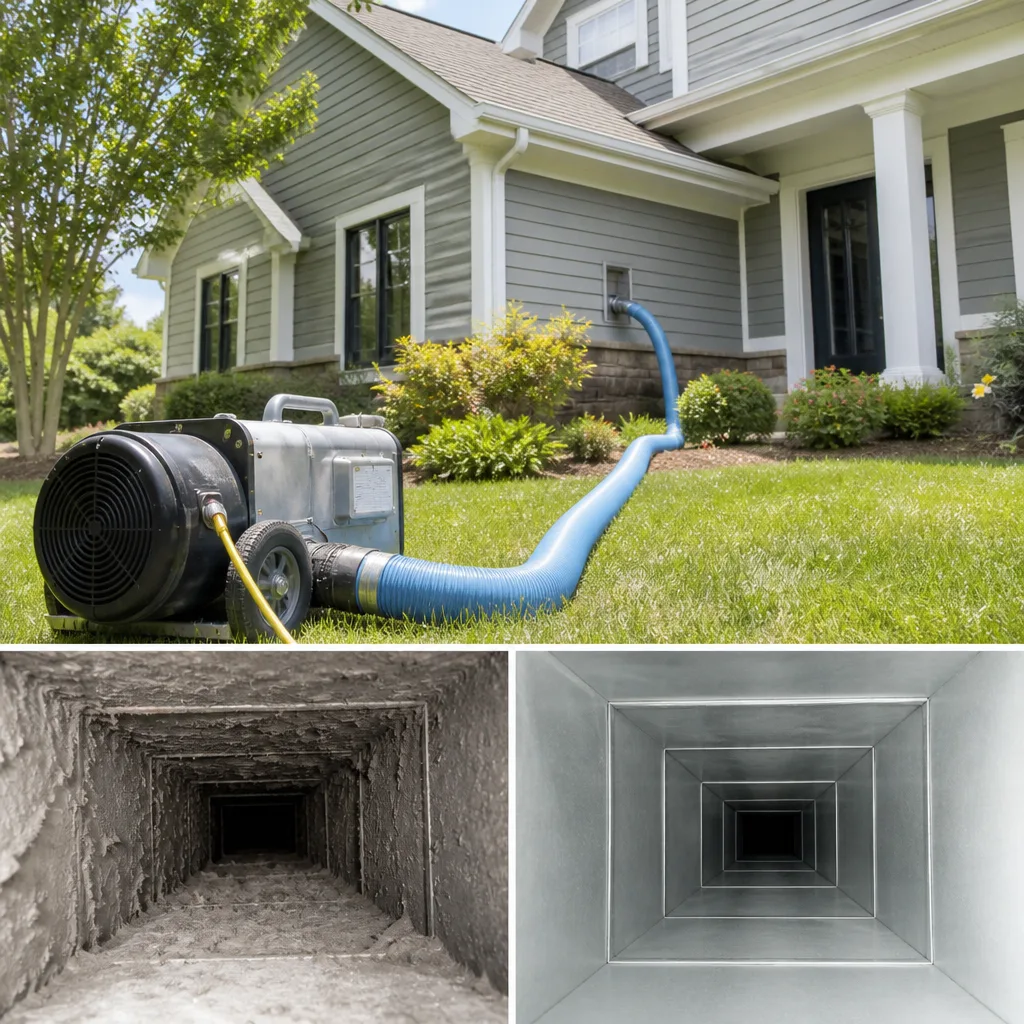 Whole-home duct cleaning
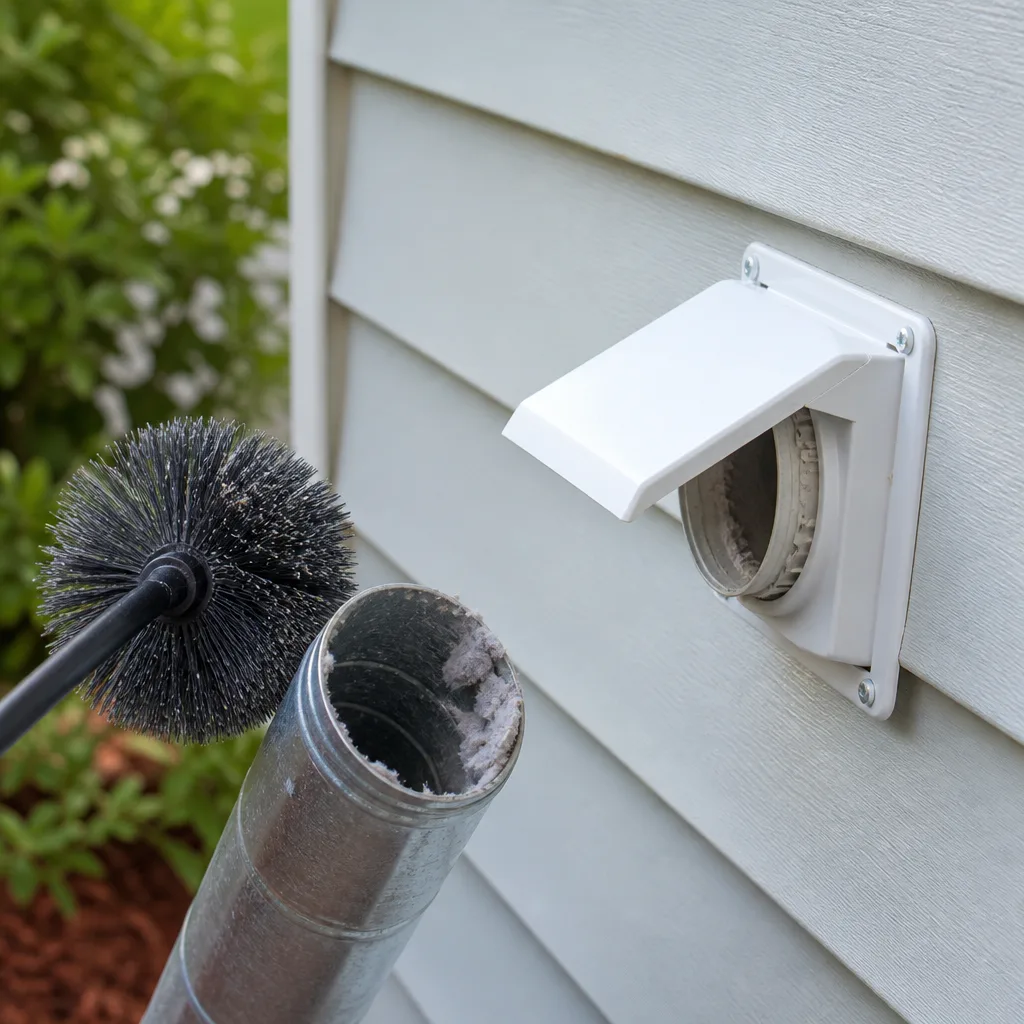 Dryer vent cleaning
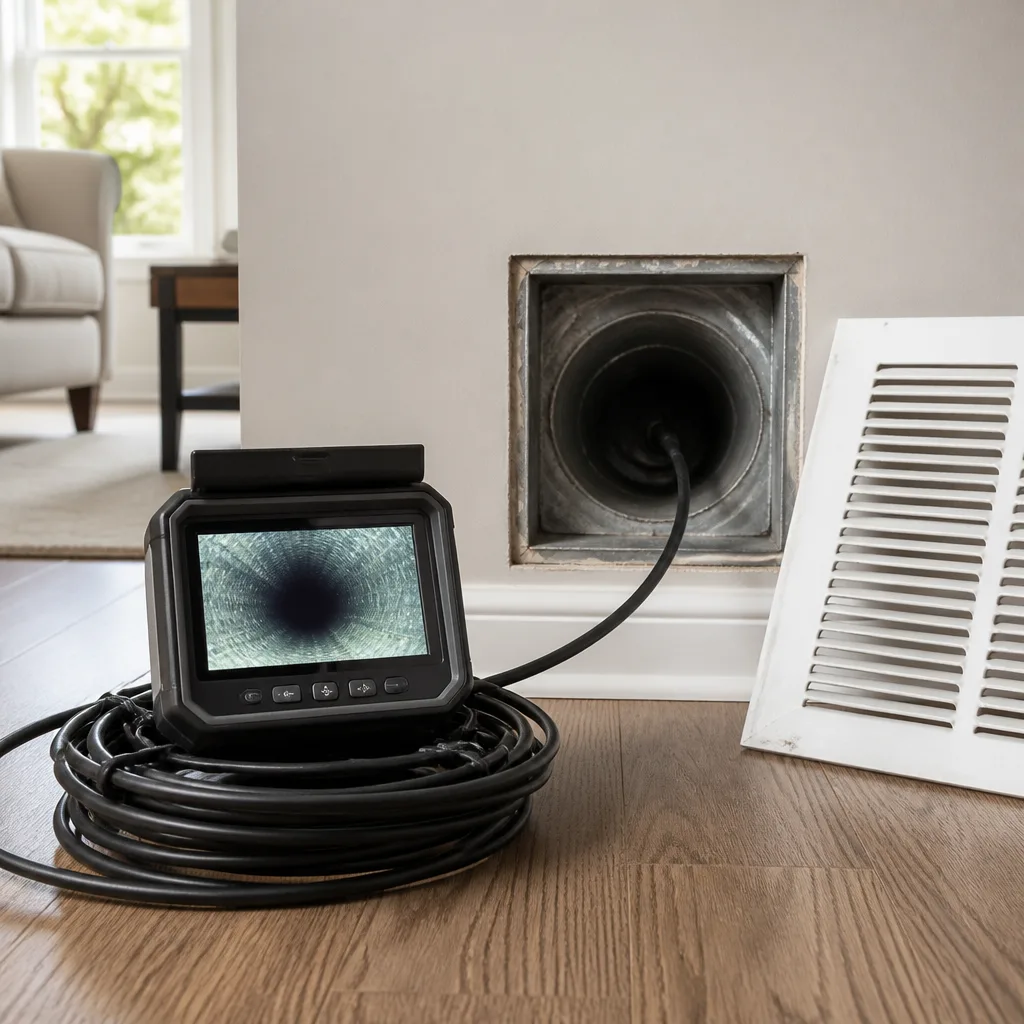 Camera inspection
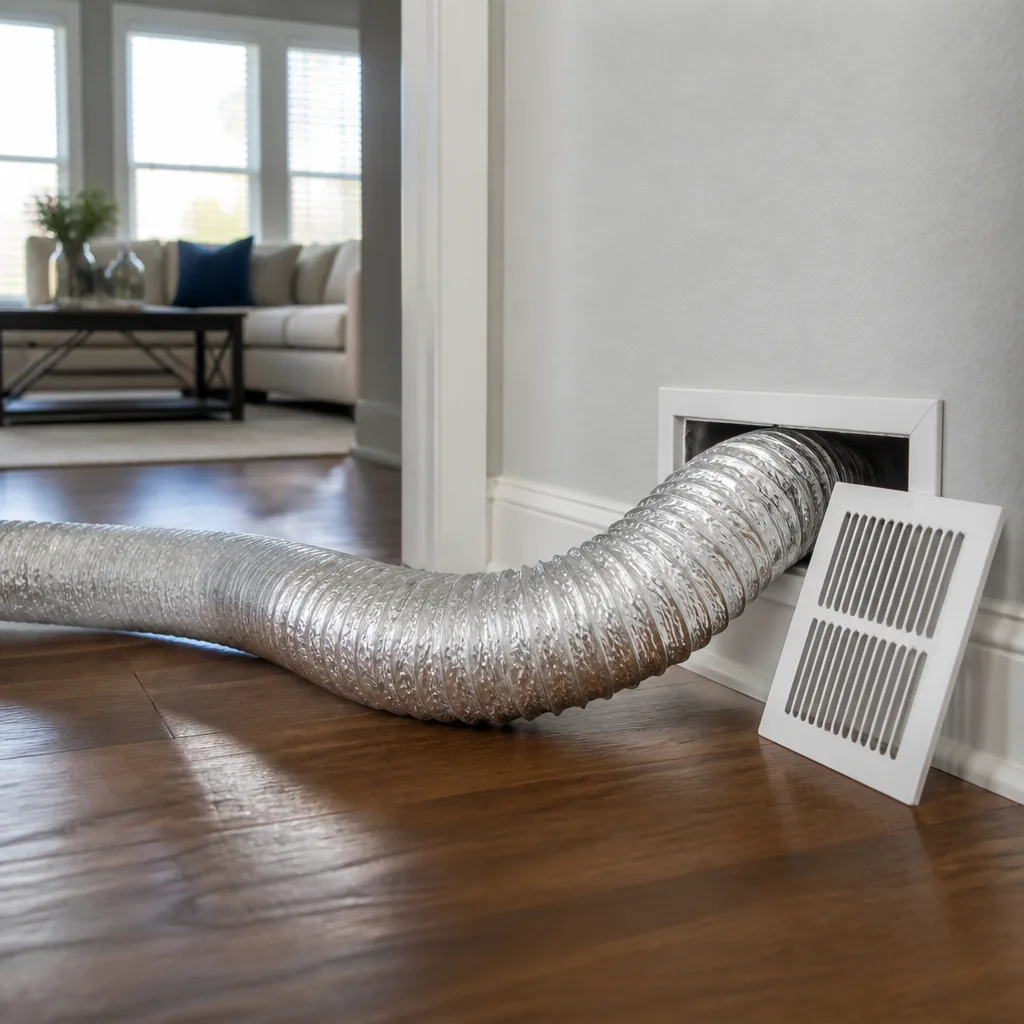 Sanitizing & deodorizing
Whole-system duct and dryer vent check with before-and-after photos - you see exactly what came out of your vents
That "$99 whole-house special" is a bait ad - the real number appears once they are in your hallway, or the "clean" is a shop-vac at the register. We photograph the inside of your ducts before and after instead.
Air Duct Cleaning Permits, Codes & Inspections in GA: What You Need to Know
Most Marietta homeowners assume any work done inside their home requires a permit. So it surprises people to learn that the cleaning itself, the part where we run brushes and negative-pressure hoses through your ductwork, needs no permit at all in Georgia. But the moment a contractor opens a duct seam, cuts into a plenum, or adds an in-duct UV lamp during what they still call a cleaning, they’ve crossed into regulated mechanical work. That distinction matters more than most people realize. A homeowner selling a house in east Cobb can get flagged by a sharp home inspector for unpermitted duct modifications, and by then the contractor who did the work is usually three phone numbers removed from reachable. This guide draws that line, step by step, so you know exactly what is permit-exempt, what triggers Georgia’s mechanical permit requirement, and what paperwork to keep. If you want to learn more about the service itself, see our Air Duct Cleaning page.
Styles & brands we work with
Quick Answer
Routine air duct cleaning and dryer vent cleaning require no permit and no inspection anywhere in Georgia, because nothing in the duct system is being modified, replaced, or newly installed. A Georgia mechanical permit is required the moment the work involves adding, replacing, or modifying duct sections, dampers, plenums, exhaust terminations, or in-duct equipment such as UV systems or booster fans. In short: cleaning is exempt, construction is not. If your contractor’s scope never goes past brushing and vacuuming, you’ll never speak to a building inspector. If it does, someone with a Georgia Conditioned Air Contractor license needs to pull a permit, and you need to know that before the first seam is cut.
Table of Contents
- Does Air Duct Cleaning Itself Require a Permit in Georgia?
- What Work Crosses the Line Into Permit Territory
- How Georgia Adopts the International Mechanical Code
- Cobb County Inspection Process for Duct Work Beyond Cleaning
- Duct Sealing Sold as Part of a Cleaning Package: What It Actually Involves
- How to Verify a Georgia HVAC License in Under Two Minutes
- Documentation to Keep After Any Duct Work
- Common Mistakes to Avoid
- When to Call a Professional
- Frequently Asked Questions
- The Bottom Line
Does Air Duct Cleaning Itself Require a Permit in Georgia?
No. Routine air duct cleaning, the kind our Air Duct Cleaning in Marietta work involves, is classified as maintenance, not construction. The Georgia state amendments to the International Mechanical Code, which we’ll get into below, require permits for installations, alterations, replacements, and additions to mechanical systems. Cleaning removes accumulated debris from an existing system. It changes nothing about the system’s design, materials, or function. No permit, no inspection, no code official involvement.
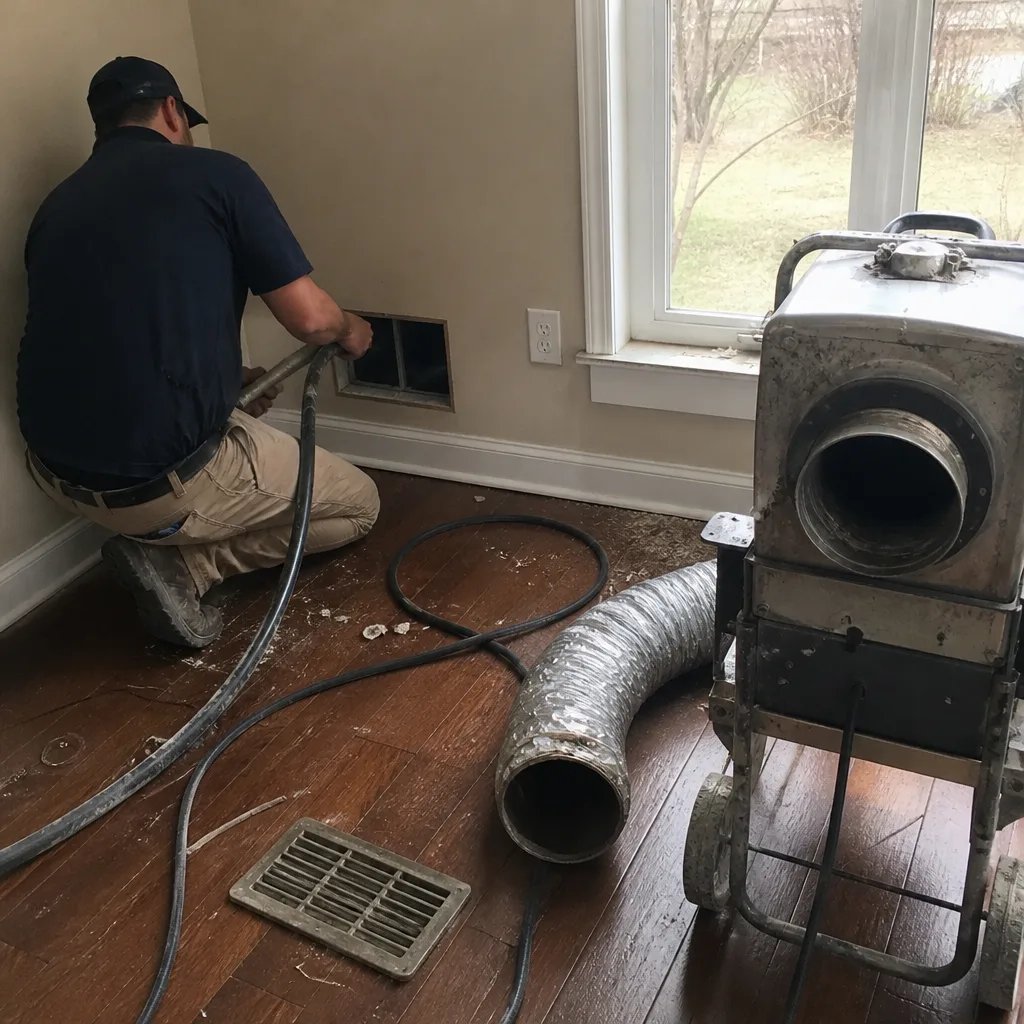
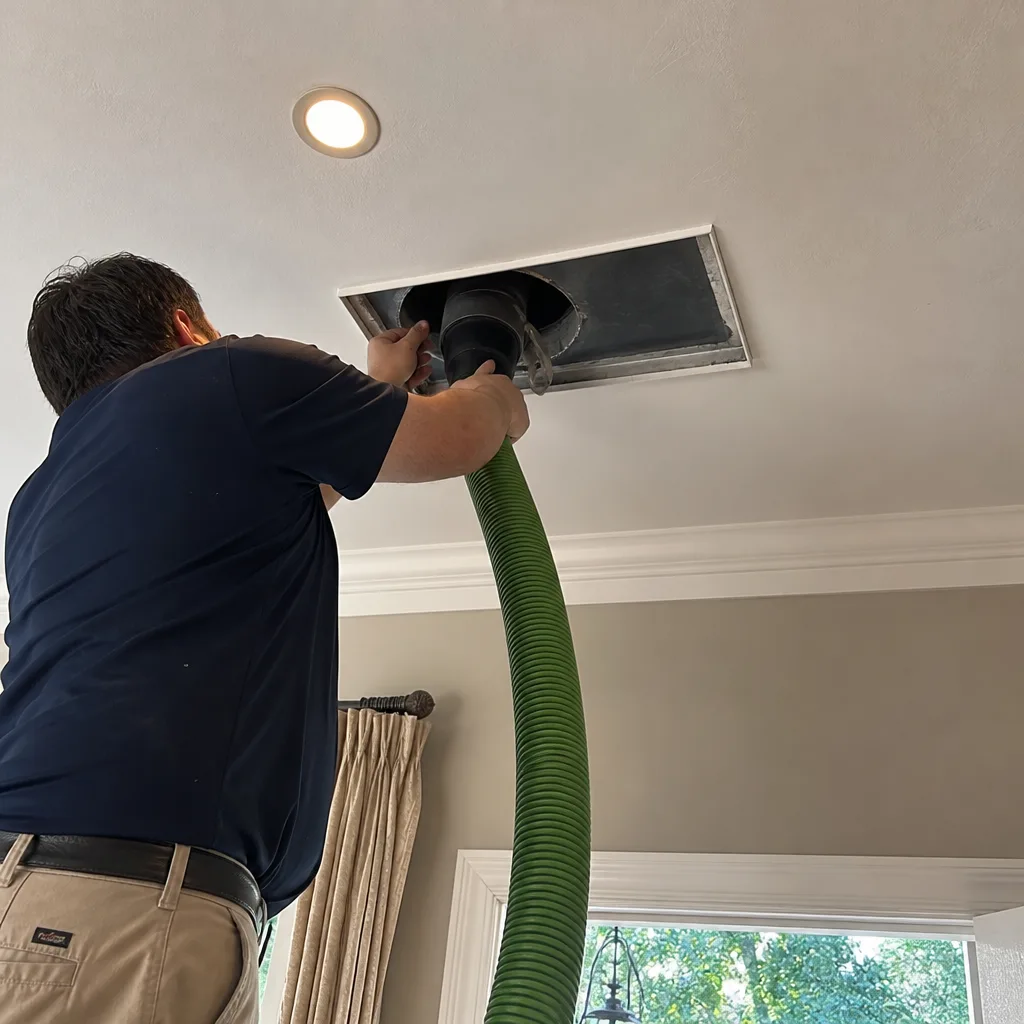
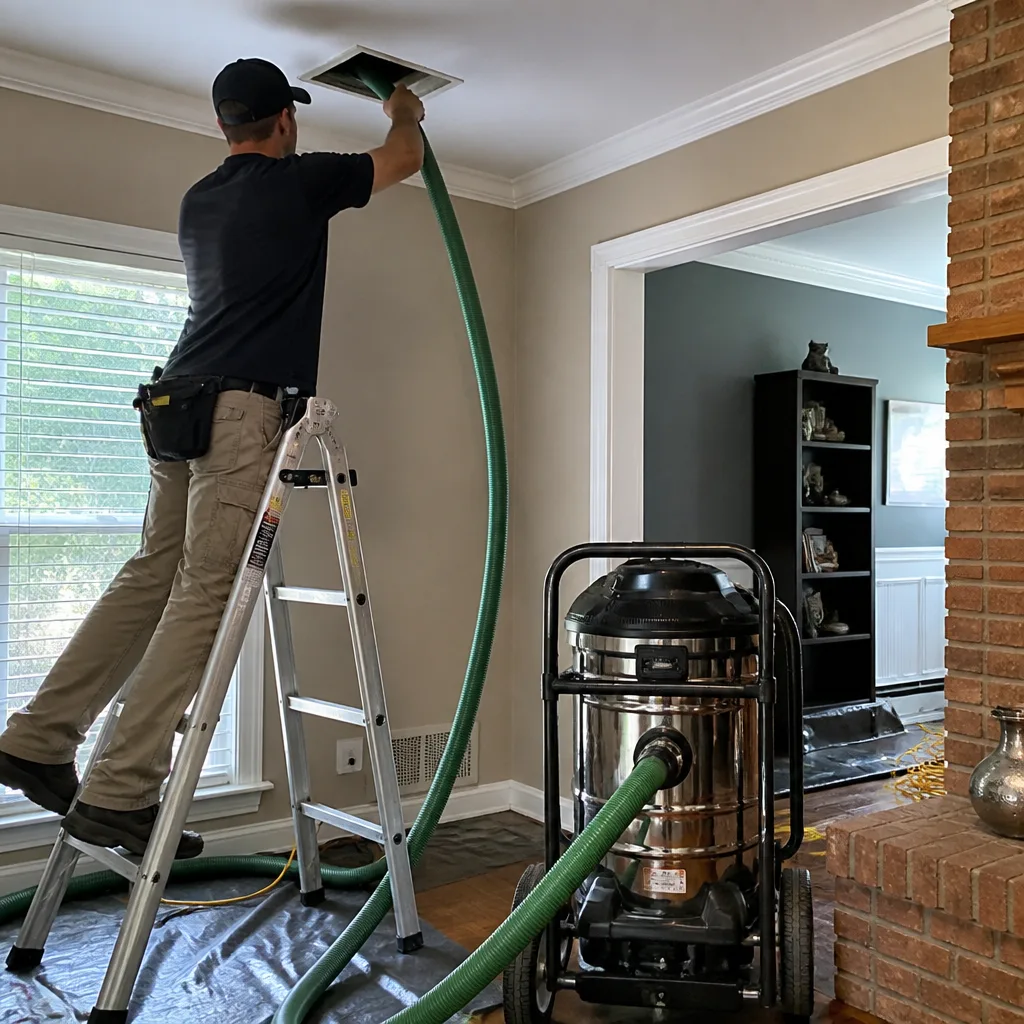
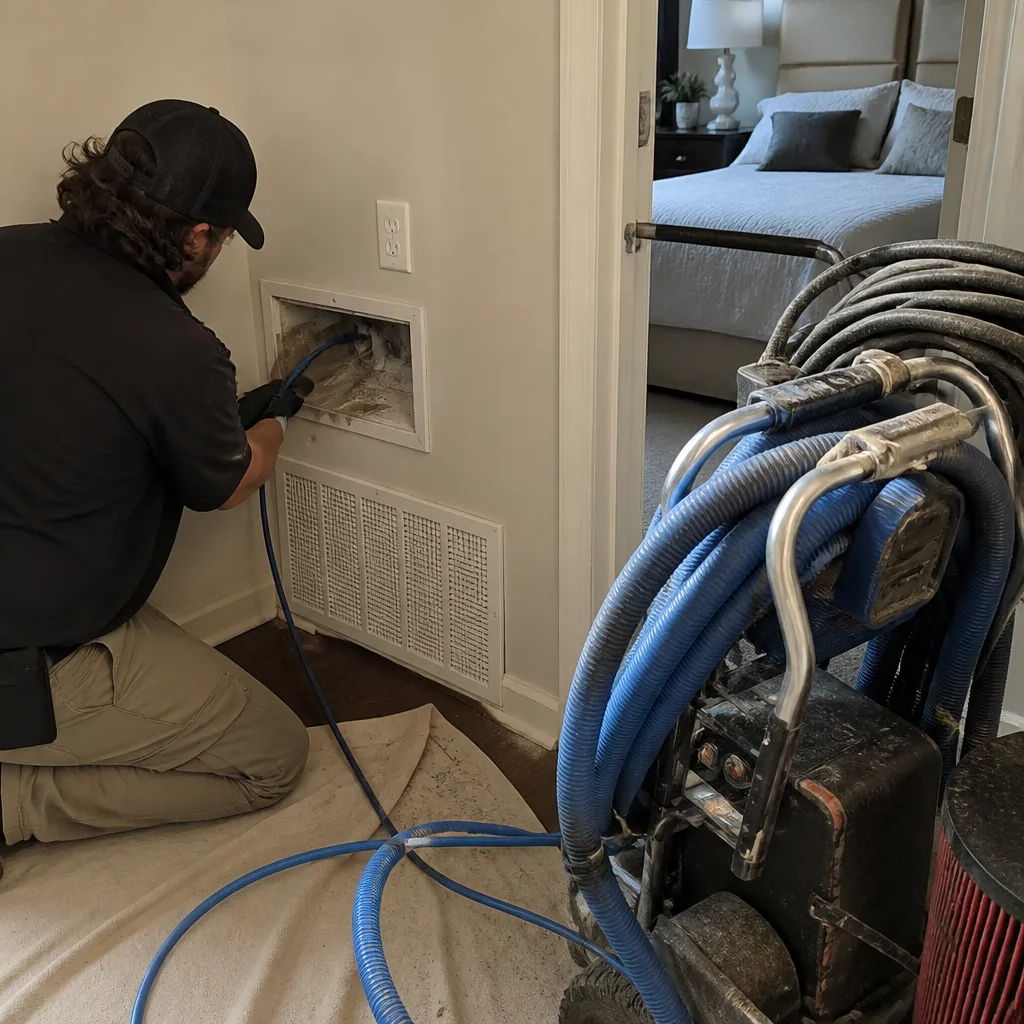
We do this work with negative-air extraction, which means a Nikro or similar high-powered vacuum unit creates suction at the duct opening while Rotobrush rotary brush agitation dislodges debris at the duct walls. The system stays sealed, the register covers come off and go back on, and the ductwork itself is untouched beyond what a good scrub produces. In our experience cleaning homes across Marietta, from Whitlock Avenue ranches to new construction near Kennesaw Mountain, the permit question almost never comes up at this stage. It should, because homeowners deserve to know where the line sits before a contractor starts talking about upgrades.
Dryer vent cleaning is the same story. It is maintenance on an existing exhaust run. No permit. No inspection. That said, if the vent pipe itself is damaged, failed, or disconnected, and the fix involves replacing a section of rigid duct or re-routing the termination, that replacement work is where permit considerations begin. The distinction is simple: cleaning equals no permit. Changing equals maybe a permit. Replacing equals usually a permit.
What Work Crosses the Line Into Permit Territory
Here is the distinction that most homeowners never hear: permits attach to the work being done, not to the person doing it or the company name on the van. If you hire someone to clean your ducts and they only clean, nothing is permitted, regardless of what they charge. If they unscrew a section of flex duct and reattach it, they’ve performed an alteration. If they cut a hole in a supply plenum to add a UV lamp housing, they’ve performed an installation. Both now fall under Georgia’s mechanical permit rules.
Specific work items that typically require a mechanical permit in Georgia include:
- Replacing any section of ductwork, including flex duct, rigid sheet metal duct, or duct board, even a three-foot repair section.
- Adding or relocating a supply or return register, because this changes the airflow design of the system and requires cutting into the duct.
- Installing an in-duct air cleaner, UV lamp, or booster fan, all of which are mechanical equipment installations and fall under the mechanical code as new work.
- Enlarging or reconfiguring a plenum, the sheet metal box above the furnace or air handler where the main trunk lines attach.
- Replacing a dryer exhaust duct termination where the vent exits the structure, if the termination, flashing, or cap is being changed rather than cleaned.
- Any work on a gas-fired appliance flue connected to the duct system, which crosses into fuel gas code territory and usually requires a mechanical permit plus a gas pressure test.
In Marietta specifically, high summer humidity means duct sections that were never sealed properly will sweat, rust, and degrade faster than they would in a dry climate. We have seen flex duct in crawl spaces on Atlanta Road that was sagging a full foot between hangers and needed replacement, not cleaning-a scenario that matches the Air Duct Cleaning Warning Signs: A Marietta Homeowner’s Reference Guide. That replacement was permit work. The homeowner thought they were getting a cleaning until the scope changed. Understanding this line protects you from surprise scope creep and from contractor pushback when you ask who is pulling the permit.
How Georgia Adopts the International Mechanical Code
Georgia operates on a statewide construction code system. The state adopts a base model code, amends it to fit Georgia conditions and legislative preferences, and then every county and municipality enforces that adopted code locally. For mechanical work, the base document is the International Mechanical Code, or IMC, which is published by the International Code Council and revised on a roughly three-year cycle. Georgia adopts a specific IMC edition with state amendments, and that adoption is what gives building departments their legal authority to require permits and conduct inspections.
The operative section for our purposes is the administrative chapter, specifically the provision that requires a mechanical permit for the erection, installation, alteration, repair, relocation, replacement, addition to, use, or maintenance of mechanical systems. Note the word maintenance. Georgia amendments clarify that minor maintenance and ordinary repairs, defined as work that does not change the structure, design, or safety characteristics of the system, do not require a permit. Filter changes are exempt. Cleaning is exempt. Motor oiling is exempt. The moment the work changes the structure or function of the system, the permit requirement switches on.
What this means practically for a Marietta homeowner is that the Cobb County Building Department, which we’ll cover next, interprets the same Georgia adoption of the IMC that every other county uses. The code does not change at the county line. Local building departments can and do adjust procedural requirements, fees, and inspection scheduling, but the underlying rule about what requires a permit is uniform statewide. A contractor who tells you that a certain type of duct modification does not require a permit anywhere in Georgia is almost certainly wrong, and in our experience, the claim usually originates from a company that does not hold a Georgia Conditioned Air Contractor license and does not want its work inspected.
Cobb County Inspection Process for Duct Work Beyond Cleaning
In Cobb County, including the city of Marietta, a permit for mechanical work is issued through the Cobb County Development and Inspections Division. Here is the process a licensed contractor follows when duct work beyond cleaning becomes part of the job:
- The contractor pulls the permit. Under Georgia law, the permit applicant for mechanical work must be a licensed Georgia Conditioned Air Contractor. Homeowners cannot pull their own mechanical permit unless they meet a narrow owner-builder exception, and even then the exemption does not apply to rental property. Do not let a contractor suggest you pull the permit yourself. That is a red flag, and it usually means the contractor is not licensed.
- The scope goes on the permit application. The contractor describes the work: replacing 40 feet of flex duct in the attic, installing a new return plenum, adding a UV lamp to the supply side. The description matters because the inspector will check the work against it.
- The fee is paid. Cobb County uses a valuation-based fee table. Small duct replacements often fall between $50 and $150 in permit fees, but larger mechanical jobs with new equipment can run higher. The contractor usually passes this fee through to the homeowner as a line item.
- The work is performed to code. The contractor sizes the new duct correctly, supports it at required intervals, seals all seams with code-approved mastic or metal tape, and insulates where required. In Georgia’s climate zone, which sits largely in the hot-humid zone, the energy code dictates minimum insulation values on ductwork in unconditioned spaces.
- The inspection is scheduled. Mechanical inspectors in Cobb County typically inspect in one visit for straightforward duct replacement jobs. The inspector checks the work against the permit description, verifies proper support and sealing, and signs off. The permit is then marked final.
- The homeowner receives the final documentation. The signed, final permit is the piece of paper you keep. We’ll return to this in the documentation section because it matters at resale.
Marietta sits within the city limits and within Cobb County, so the same county building department governs the permit and inspection process for city residents. Homeowners in unincorporated Cobb follow the same procedure. We recommend asking any contractor doing anything beyond cleaning to name the permit number and the scheduled inspection date in writing before work begins, because those two details eliminate most of the problems we see.
Duct Sealing Sold as Part of a Cleaning Package: What It Actually Involves
Duct sealing deserves its own section because it is the single biggest gray area we encounter when talking to Marietta homeowners about their duct cleaning quotes. Many cleaning companies sell sealing as an add-on, and the price sounds reasonable. But sealing means different things to different contractors, and the difference determines whether you are looking at maintenance or mechanical construction.
At its most basic, sealing means applying an aerosol sealant or mastic to accessible duct joints and seams from the outside of the duct. This is maintenance-adjacent work. It closes small gaps, reduces air loss, and usually does not require a permit because the duct system is not being altered, only tightened. We do not offer this as part of our cleaning packages, and we say so plainly, because our written price covers cleaning, not mechanical modifications.
At its most invasive, sealing means an aerosol duct sealing system, the kind where a fog of sealant is blown through the duct interior under pressure and deposited at leak points. This is increasingly common in the Atlanta market and it has a real benefit: it seals leaks that exterior mastic can’t reach. But it is also an alteration of the duct system. It can change airflow characteristics. It can deposit sealant on dampers, boots, and grilles. Some Georgia jurisdictions consider this an alteration requiring a permit, and some require verification that the sealant used meets the code requirements for flame spread and smoke development. A company doing aerosol sealing should be licensed as a Conditioned Air Contractor, because they are operating on the air distribution system in a way that the Georgia code treats as mechanical work.
Here is the short rule for a Marietta homeowner. If the sealing happens at the duct exterior and the system is otherwise left alone, it probably does not require a permit. If the sealing happens inside the ducts, it crosses into work that the state sees as mechanical alteration, and you want a licensed contractor, a permit, and an inspection. And if the ductwork is old enough that sealing is being pitched as a fix, the more important question is whether the duct should be replaced anyway. In Marietta’s humid climate, mastic on a rusting duct is a bandage on an infection.
How to Verify a Georgia HVAC License in Under Two Minutes
This is the most practical section of this guide, and the one we wish every Marietta homeowner would read before signing any contract that goes beyond cleaning. The State of Georgia licenses HVAC contractors through the State Construction Industry Licensing Board. The license class you are looking for is a Conditioned Air Contractor license, and it is the only class that legally authorizes a contractor to perform mechanical work, including duct modifications, replacements, and installations.
Here is the two-minute verification process:
- Ask for the license number. A legitimate contractor provides it immediately, often printed on the estimate, the invoice, or the company van. The number format for a Conditioned Air Contractor license in Georgia starts with the letters CN followed by six digits. If the company hesitates, that is your answer.
- Go to the State Licensing Board verification page. The Georgia Secretary of State maintains a searchable licensee database at the Professional Licensing Boards division. You want the Construction Industry Licensing Board section, and you want the Conditioned Air Contractor search.
- Enter the license number or the company name. The search returns the license type, status, issue date, expiration date, and any disciplinary actions. You are looking for an active status with no recent disciplinary entries.
- Confirm the company name matches. Some unlicensed operations will give you the license number of a different company and hope you do not check. The name on the license must match the name on your contract.
- Take a screenshot. Save the verification page. If anything ever goes sideways, you have a documented check in your corner.
For our Dryer Vent Cleaning in Marietta work, no HVAC license is required, because the work is maintenance. But we still encourage homeowners to verify any contractor they let into the home, and we are happy to explain what our own technicians carry in terms of background checks and equipment. We run Rotobrush and Nikro equipment because these are professional-grade tools designed for the work, and our people are background-checked and uniformed because we operate under the Kingswell Guarantee and Kestrel Air Duct Marietta home standards, which are written, not spoken.
Documentation to Keep After Any Duct Work
The paperwork problem is the one that sneaks up on Marietta homeowners years later. You sell a house. The buyer’s inspector opens the attic and asks about the newer flex duct runs. The buyer’s agent asks for the permit history. If you have nothing, the transaction either stalls or the price moves. This exact scenario plays out in subdivisions across east Cobb and along the Whitlock corridor every year.
Here is what to keep after any duct-related work, in order of importance:
- The final mechanical permit. This is the signed document showing the work passed inspection. It is the single most valuable piece of paper you can have for any work beyond cleaning.
- The contractor’s invoice and scope description. It should list exactly what was done, the equipment installed, and the permit number. Vague invoices do not help you in a negotiation.
- The contractor’s license number and verification. The screenshot you took from the state board. Keep it with the invoice.
- Before and after photos. For cleaning work specifically, which does not generate a permit, photos of the duct interior are your proof that work actually happened. We document every job with before and after photos because a duct interior is not something a homeowner can casually inspect on their own.
- The manufacturer documentation for any installed equipment. A UV lamp installed in the duct has a serial number, a warranty card, and an installation manual. The next homeowner wants all three.
For cleaning only work, the smartest piece of documentation is a written service report with photos. That combination gives a future buyer confidence that the system was maintained, which is part of responsible homeownership in a climate where the HVAC runs hard for five or six months straight.
Common Mistakes to Avoid
- Assuming every “licensed and insured” company holds a Conditioned Air Contractor license. Many companies in the Atlanta market are licensed as a general contractor or not licensed as a mechanical contractor at all. A general contractor license does not authorize mechanical work in Georgia. Ask for the CN number specifically.
- Letting the contractor pull the homeowner permit. In Cobb County, a contractor who pressures you to pull the permit yourself is avoiding inspection. The inspection is not a convenience. It is your protection.
- Signing a cleaning contract that includes duct replacement work without a permit. If the scope changes from cleaning to replacement mid-job, the contract should change too, and a permit should be pulled. A contractor who installs new duct without a permit has put you in a position to pay for unpermitted work.
- Forgetting the record-keeping requirement. Even permitted work is only as useful as your ability to prove it later. A homeowner who tossed the final permit has no proof the work passed inspection.
- Paying for aerosol duct sealing without verifying the contractor’s license. Aerosol sealing is mechanical work under Georgia’s code framework. An unlicensed operator doing aerosol sealing is performing unlicensed mechanical work on your home.
- Ignoring the signs of duct degradation in a humid climate. In Marietta, rust on duct seams, musty air from the registers, or visible water stains around the plenum mean the ductwork has bigger problems than dirt. Cleaning will not fix rust. Replacement will, and replacement triggers the permit conversation.
When to Call a Professional
Call a professional in any of these situations: your ducts are over ten years old and you have uneven room temperatures across the house, you see visible mold growth inside the registers, dust returns within weeks of a previous cleaning, or you have just purchased a home in Marietta and have no maintenance history on the HVAC system. You should also call before you close on a house if the inspector flagged older ductwork, because knowing the condition of the duct system is different than knowing the permit status, and you need both. Air Duct Cleaning in Marietta is a maintenance service, and we’re glad to walk you through the permit question while we’re there. Kestrel Air Duct Marietta offers free estimates in Marietta – call (762) 533-6494.
Frequently Asked Questions
Most homes in Marietta run between $300 and $600 for a full air duct cleaning of the supply and return systems, depending on the size of the home and the number of return drops. We give a written price before any work begins, and that price does not change at the door. Call (762) 533-6494 for an exact quote – estimates are free.
No, you do not need a permit to clean air ducts in Georgia. Cleaning is considered maintenance and is exempt from the mechanical permit requirement under the state’s adoption of the International Mechanical Code, because nothing in the duct system is being modified, replaced, or newly installed.
If the contractor wants to replace any duct section, even a short repair section, that replacement work requires a mechanical permit under Georgia code and must be performed by a licensed Conditioned Air Contractor. You should ask for the permit number before the replacement work begins, and you should see the final inspection signed before you pay the final invoice.
Cheap duct cleaning quotes in the Atlanta market usually come from operators who are not using professional-grade equipment, are not insured, or are using a low price to get a foot in the door before adding on fees after the work begins. The honest cost of duct cleaning includes real equipment like Rotobrush rotary brush systems and Nikro negative-pressure units, plus background-checked technicians and insurance. A $99 whole-house quote almost never reflects the real cost of a trained crew doing the work properly. Call (762) 533-6494 for a written price that is the same before and after the work.
Ask for before and after photos of the duct interior, taken from the same access point. A legitimate contractor documents the work because the duct interior is not visible to a homeowner. We provide before and after photos as part of every cleaning, and we stand behind the work with our 365-Day Done Right Promise: if it is not done right, we come back and make it right at no charge.
In Marietta’s climate, where the HVAC system runs hard through long humid summers and pollen season coats everything in a fine yellow film, most homes need duct cleaning every three to five years. Homes with shedding pets, recent renovation dust, or household allergies may need it more often. The three to five year frame is a maintenance guideline, not a sales pitch, and no one should pressure you into an annual cleaning on an ordinary suburban house.
The Bottom Line
Cleaning your air ducts in Georgia requires no permit, no inspection, and no license, because cleaning does not alter the mechanical system. The moment the work involves replacing, modifying, or adding to the duct system, it moves into permitted mechanical territory, and the contractor should hold a Georgia Conditioned Air Contractor license and pull a permit with Cobb County before work starts. Most confusion on this topic is avoidable if you know the line and ask the right questions. For more guides & resources on maintaining your home’s air system, visit our blog. Keep the paperwork, verify the license, and insist on a written price before work begins. If you’re in Marietta and want a straight answer on your duct situation, call (762) 533-6494 and we’ll come look.
Written by Dale Whitmore, Owner at Kestrel Air Duct Marietta, serving Marietta since 2004.
See the difference
 Before
 After
After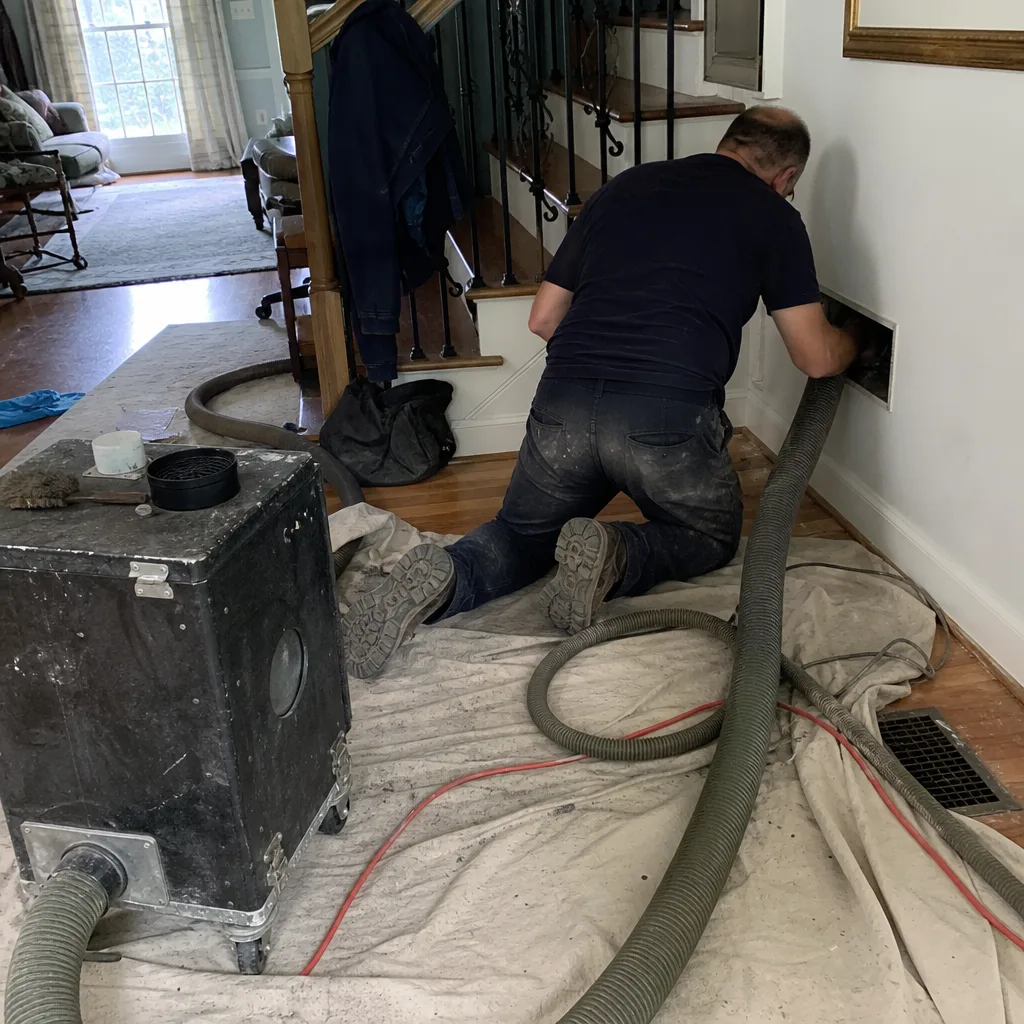 Before
 After
After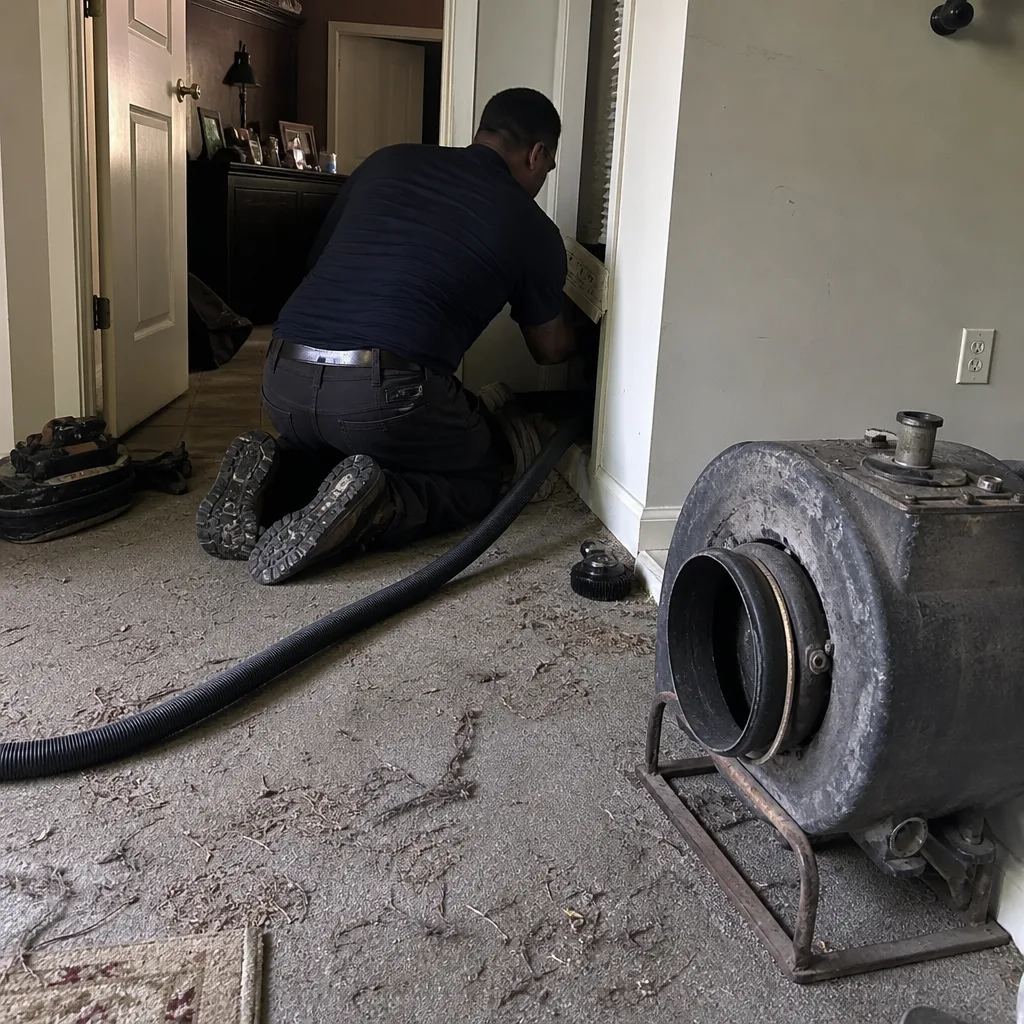 Before
 After
After