
Last updated October 15, 2026
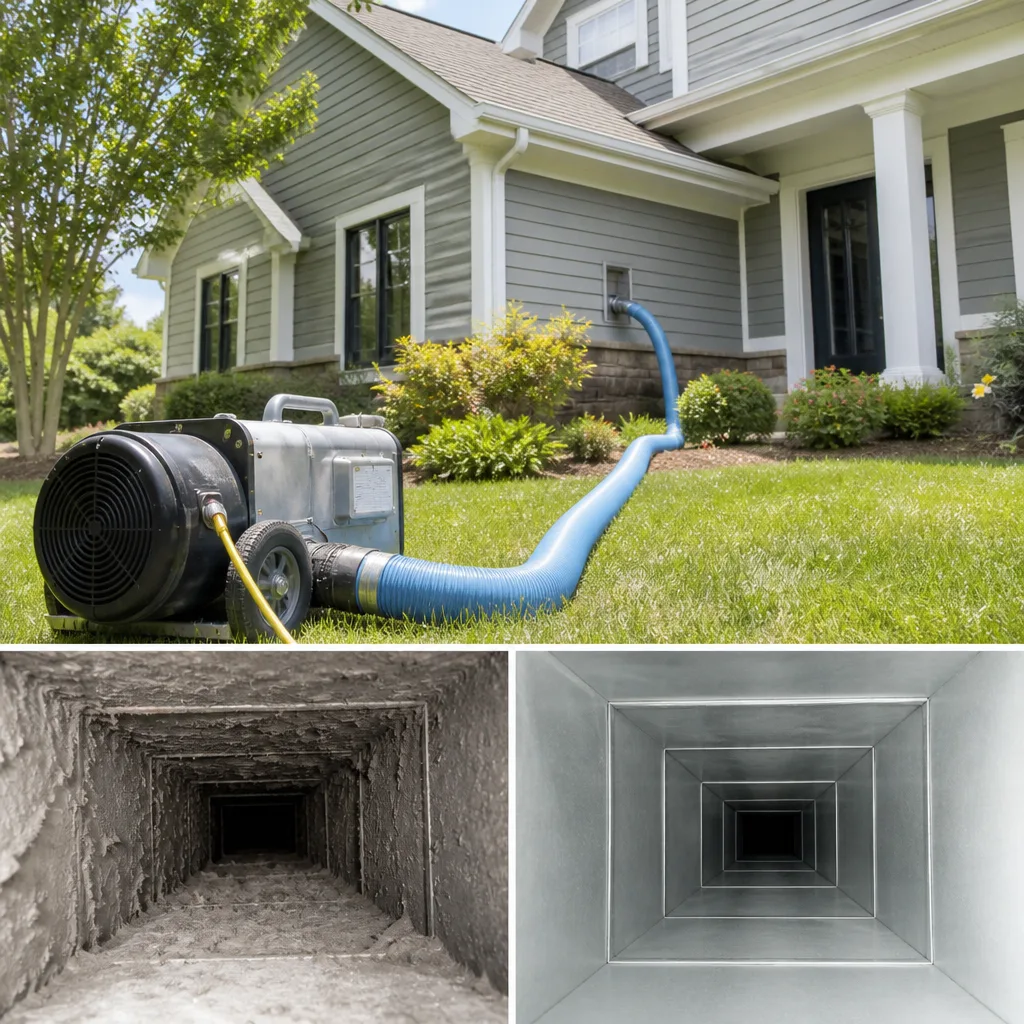 Whole-home duct cleaning
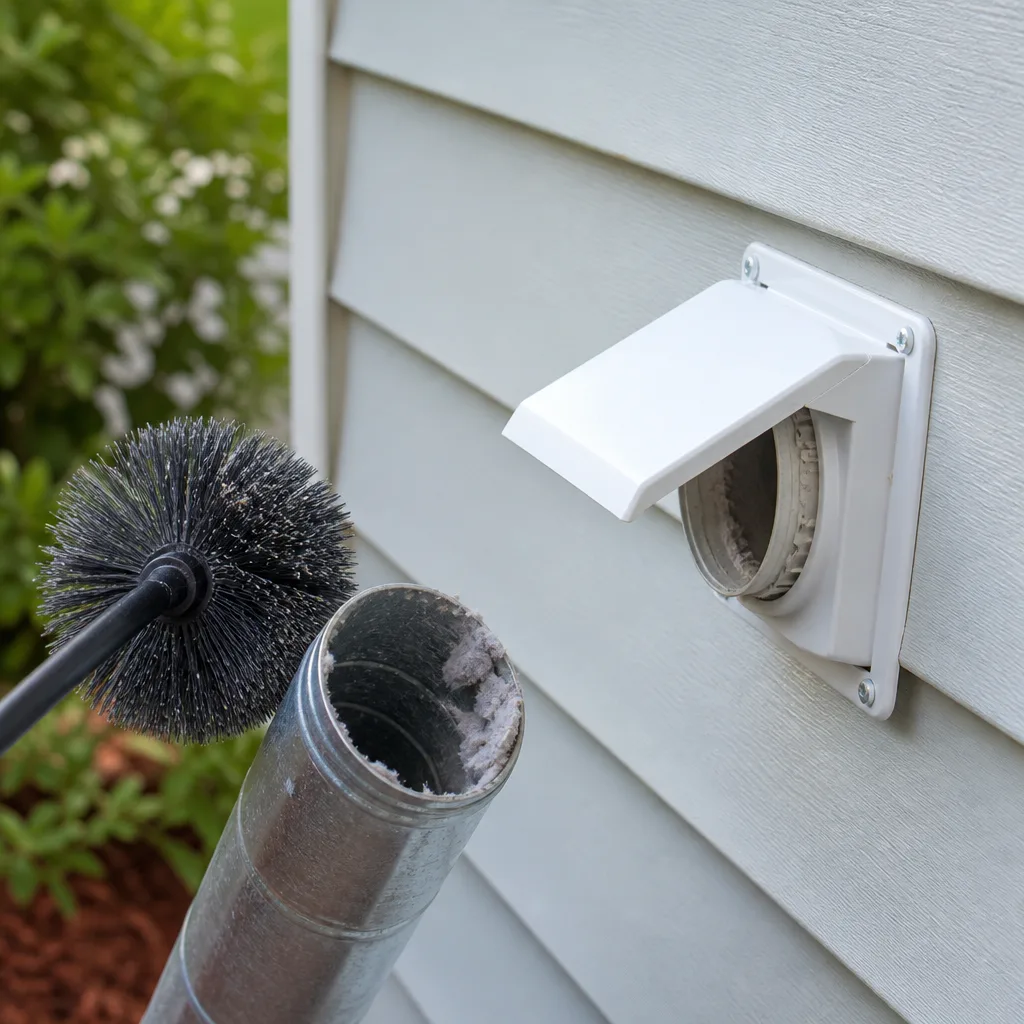 Dryer vent cleaning
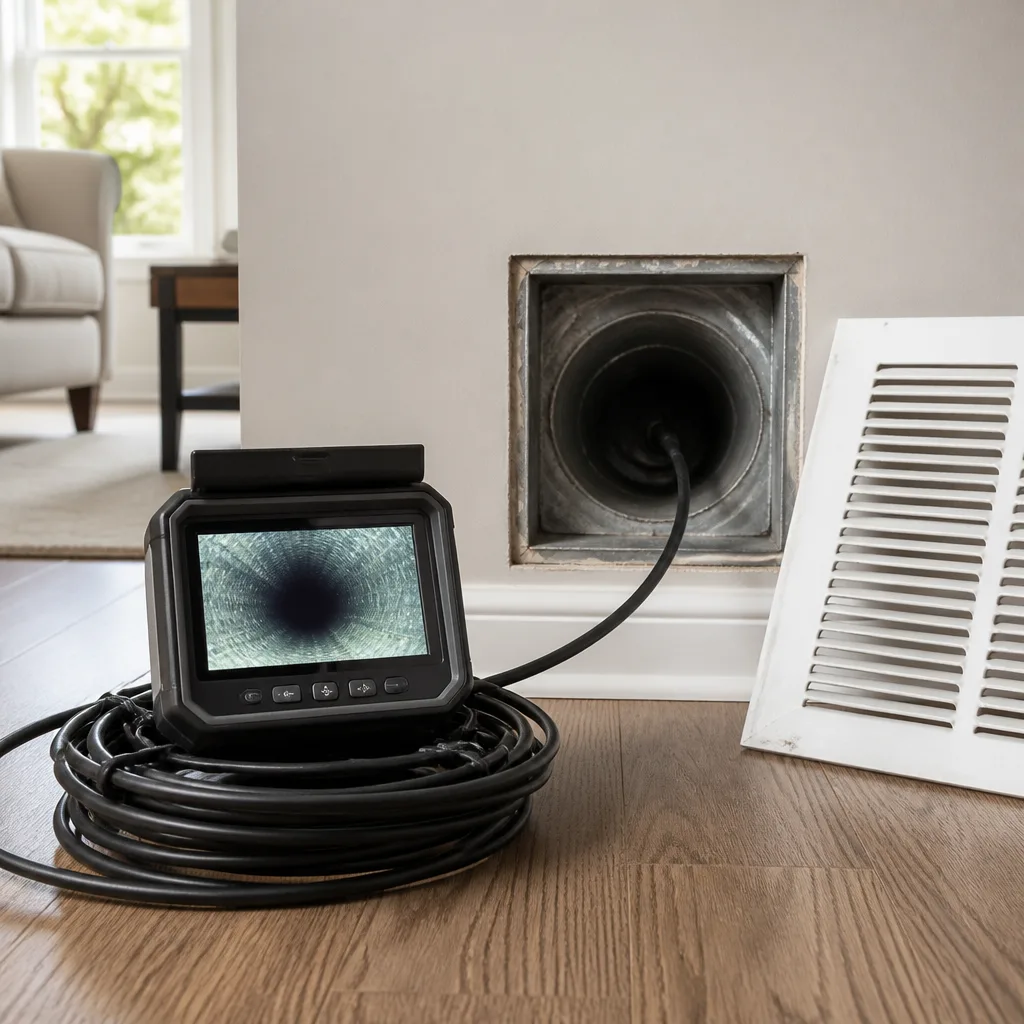 Camera inspection
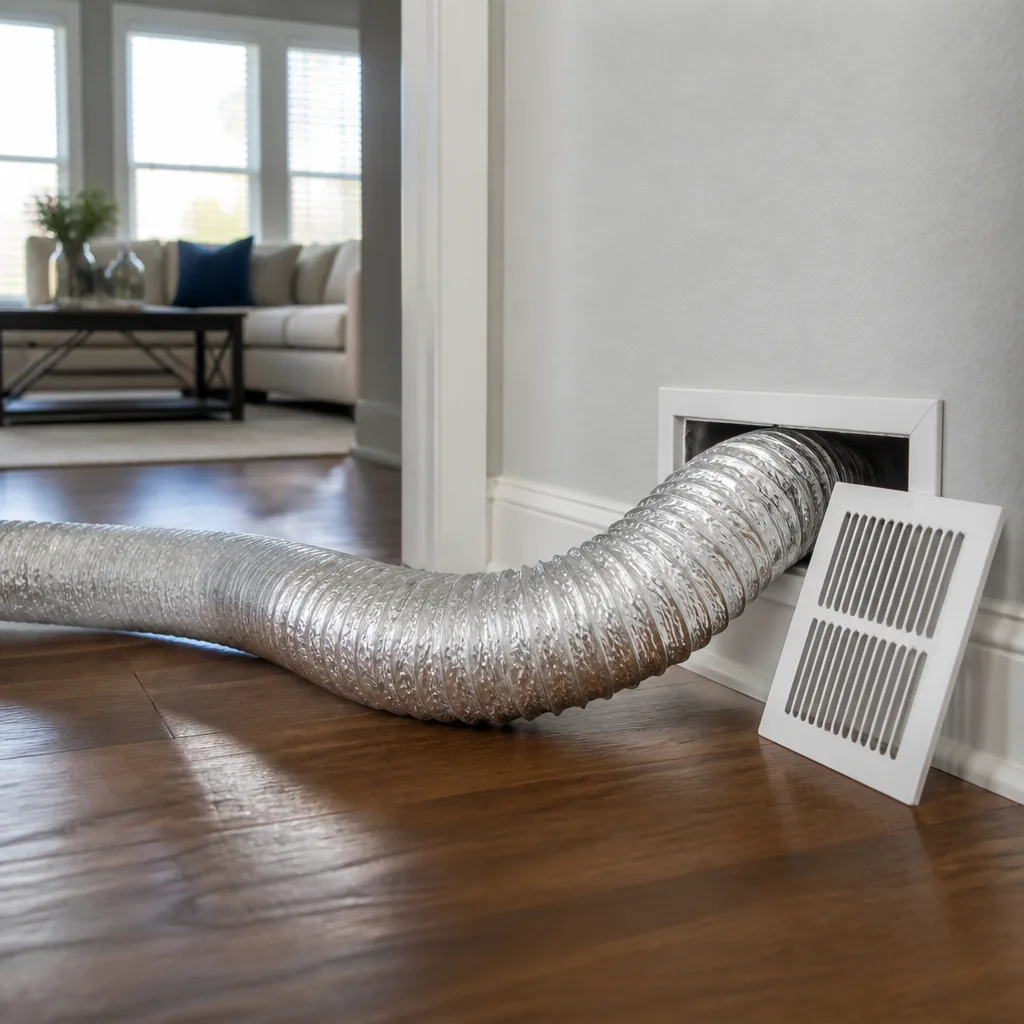 Sanitizing & deodorizing
Whole-system duct and dryer vent check with before-and-after photos - you see exactly what came out of your vents
That "$99 whole-house special" is a bait ad - the real number appears once they are in your hallway, or the "clean" is a shop-vac at the register. We photograph the inside of your ducts before and after instead.
The Complete Guide to Air Duct Cleaning in Marietta
Here’s a fact most air duct cleaning websites won’t tell you: the EPA has never issued a recommended cleaning schedule for residential ductwork. Not once, in the agency’s entire history. That omission matters because it puts the burden of proof where it belongs – on the contractor to show you something real before touching your vents. This guide-along with our DIY vs Professional Air Duct Cleaning: The Marietta Homeowner’s Decision Guide-walks through what the inside of a Marietta home’s ductwork actually looks like, what genuinely warrants professional extraction, and what conditions mean you should simply change a filter and move on. We’ll cover red-clay dust, Georgia humidity, the NADCA standard, and how to read a legitimate quote in plain dollars.
Styles & brands we work with
Quick Answer
Air Duct Cleaning services in Marietta typically cost between $350 and $650 for a full system on a home under 2,500 square feet, with larger homes or heavily soiled systems running higher. Most homes don’t need annual cleaning – the decision should hinge on visible mold, vermin activity, or airflow restriction you can measure at the register. Any reputable contractor should show you before-and-after photos of your actual ducts and hand you a written price before a single vent is opened.
Table of Contents
- How Much Does Air Duct Cleaning Cost in Marietta?
- What Actually Accumulates Inside Marietta Ductwork
- Dirty vs. Dusty: How to Tell Without a Camera
- What Professional Cleaning Actually Involves
- The NADCA Standard and Why It Matters
- The Decision Tree: Clean Now, Wait, or Call an HVAC Tech First
- How a Legitimate Inspection and Written Quote Should Be Structured
- Common Mistakes to Avoid
- When to Call a Professional
- Frequently Asked Questions
- The Bottom Line
How Much Does Air Duct Cleaning Cost in Marietta?
Most single-family homes in Marietta fall between $350 and $650 for complete air duct cleaning. That’s the honest range – not a teaser price that triples once the van is in the driveway. At Kestrel Air Duct Marietta home, we write the number down before any work begins, and that number doesn’t change at the door.
Here’s how the math typically breaks down on a 2,000-square-foot Georgia ranch or two-story:
- Full system cleaning (10-14 vents, main trunk, return): $350-$500
- Larger homes (14+ vents, dual systems, finished basement): $500-$650
- Heavy contamination (construction debris, vermin, visible mold on non-porous surfaces): $650-$850+
- Dryer vent cleaning as an add-on: $75-$150 in most Marietta homes
Anyone quoting below $250 for a whole-house cleaning in Cobb County is either planning to upsell you at the door or running a box-store shop vac through your registers and calling it a day. Real negative-air extraction equipment, operated by technicians who are background-checked and trained, costs money to run. The low-ball quote is a door-opener, not a final price.
What Actually Accumulates Inside Marietta Ductwork
Marietta has two things working against your ductwork that most national guides never mention: humidity and red clay. The Georgia clay isn’t just a laundry problem – it’s a fine, mineral-heavy particulate that finds its way into return vents on shoes, pets, and open windows. Combined with summer humidity levels that routinely sit above 70 percent, that dust doesn’t stay loose and dry. It settles into the film that builds on duct walls, and in flex duct especially, it clings.
Here’s what we see when we open up systems in Marietta homes:
- Flex duct in attics and crawlspaces: The corrugated interior walls trap dust in the ridges. Red-clay particulate mixes with humidity and creates a paste-like coating that hardens over time. In homes near Kennesaw Mountain or along the Chattahoochee corridor where crawlspace moisture runs high, we regularly see this coating reduce airflow by 20-30 percent.
- Sheet metal duct in older ranches (East Cobb, Whitlock Avenue corridor): Galvanized metal resists the paste effect but collects loose dust along the bottom seam. Sheet metal systems from the 1970s and 80s often have poor sealing, so they pull insulation and attic dust in through gaps.
- Return ducts near kitchens and laundry rooms: Cooking grease aerosolizes, cools inside the return, and acts as an adhesive for everything else. Laundry lint from unsealed dryer vents is another contributor. This isn’t lifestyle commentary – it’s physics.
The relevant question isn’t whether dust exists. It always will. The question is whether the accumulation has reached a point where it restricts airflow or contributes to the biological load moving through your living space.
Dirty vs. Dusty: How to Tell Without a Camera
Every duct system in every home on earth has dust in it. That’s what filters are for. Surface dust – the fine, grey film that wipes off with a finger – is normal. It doesn’t justify a cleaning, and any contractor who tells you it does isn’t being straight with you.
Here are four things to check before you spend a dollar:
- Remove one register and look inside with a flashlight. If you see fine, loose dust that moves when you blow on it, that’s normal. Change your filter and check again in a month. If you see matted debris, visible mold on the metal surface, or something structural (insulation, pest droppings, drywall chunks), that’s a different situation.
- Hold a tissue near a supply register while the system runs. Good airflow should push the tissue at least six inches. If it barely flutters, you have a restriction somewhere – dirty ductwork, a clogged filter, or a failing blower. A cleaning is only one of three possible fixes, which is why a diagnosis matters before you spend.
- Check the return side for visible buildup. The return grille near your hallway is the dustiest single point in the system. If it’s caked with grey fuzz, the system has been circulating that material. If the return looks clean but supplies are weak, your problem may be mechanical, not environmental.
- Look for evidence of rodents or insects. Cobb County homes – especially older ranches with crawlspace access – get mice in the ductwork more often than homeowners realize. Droppings, nesting material, or the faint ammonia smell of rodent urine are automatic triggers for professional cleaning.
One more distinction worth making: biofilm. In humid Georgia crawlspaces, condensation on the inside of duct surfaces can support a thin biological film. It looks like a dark stain, not a patch of fuzz, and it doesn’t wipe off easily. Surface dust is a nuisance. Biofilm is a source of spores and odors. The distinction matters because a brush-only cleaning may not address it – you need HEPA-filtered negative-air extraction to pull the loosened material out of the living space, not just scrub it around.
What Professional Cleaning Actually Involves
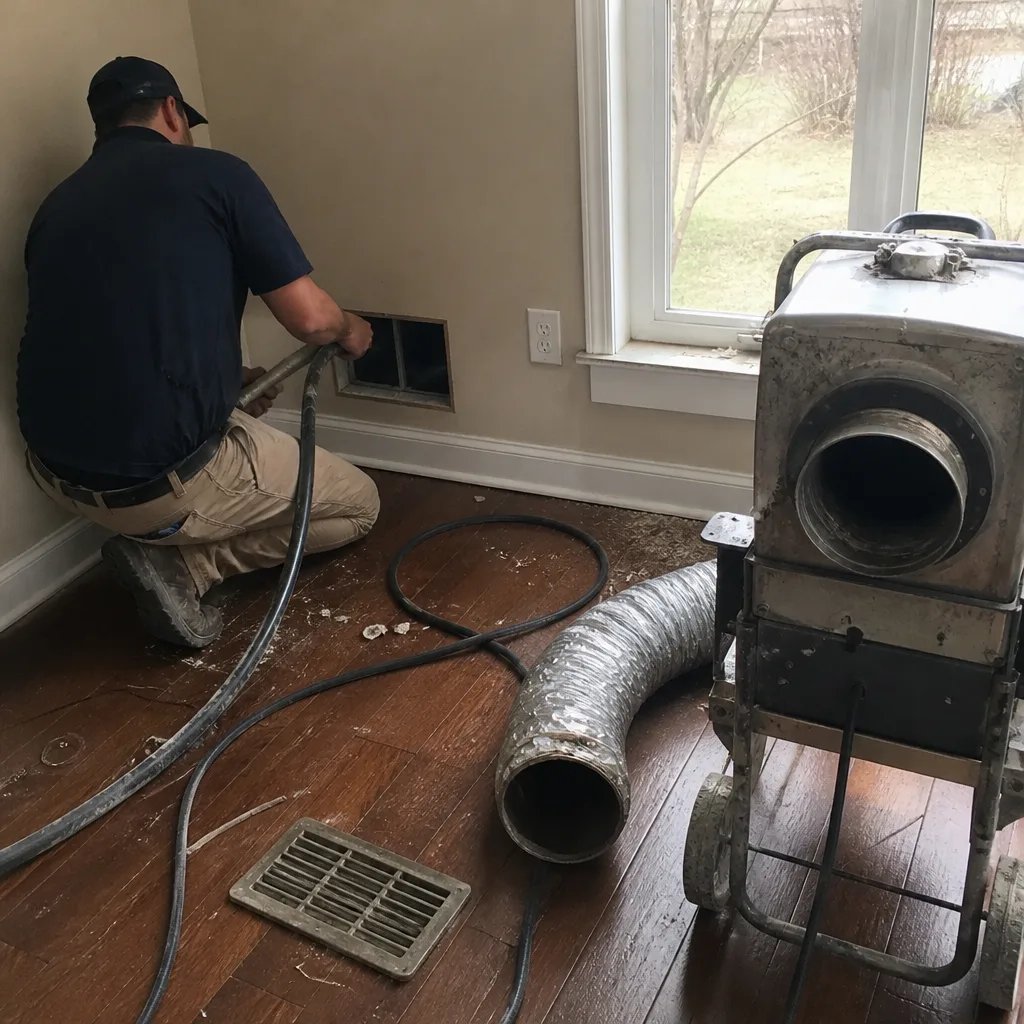
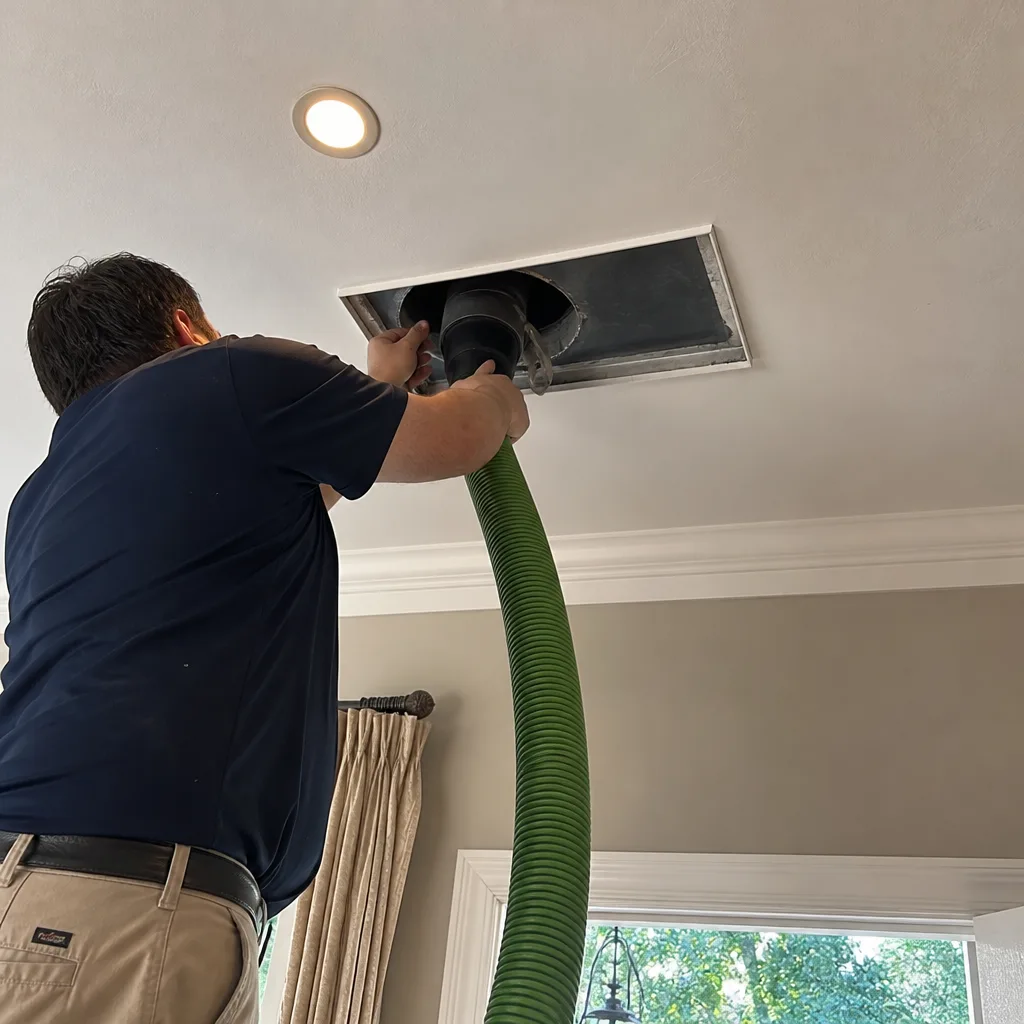
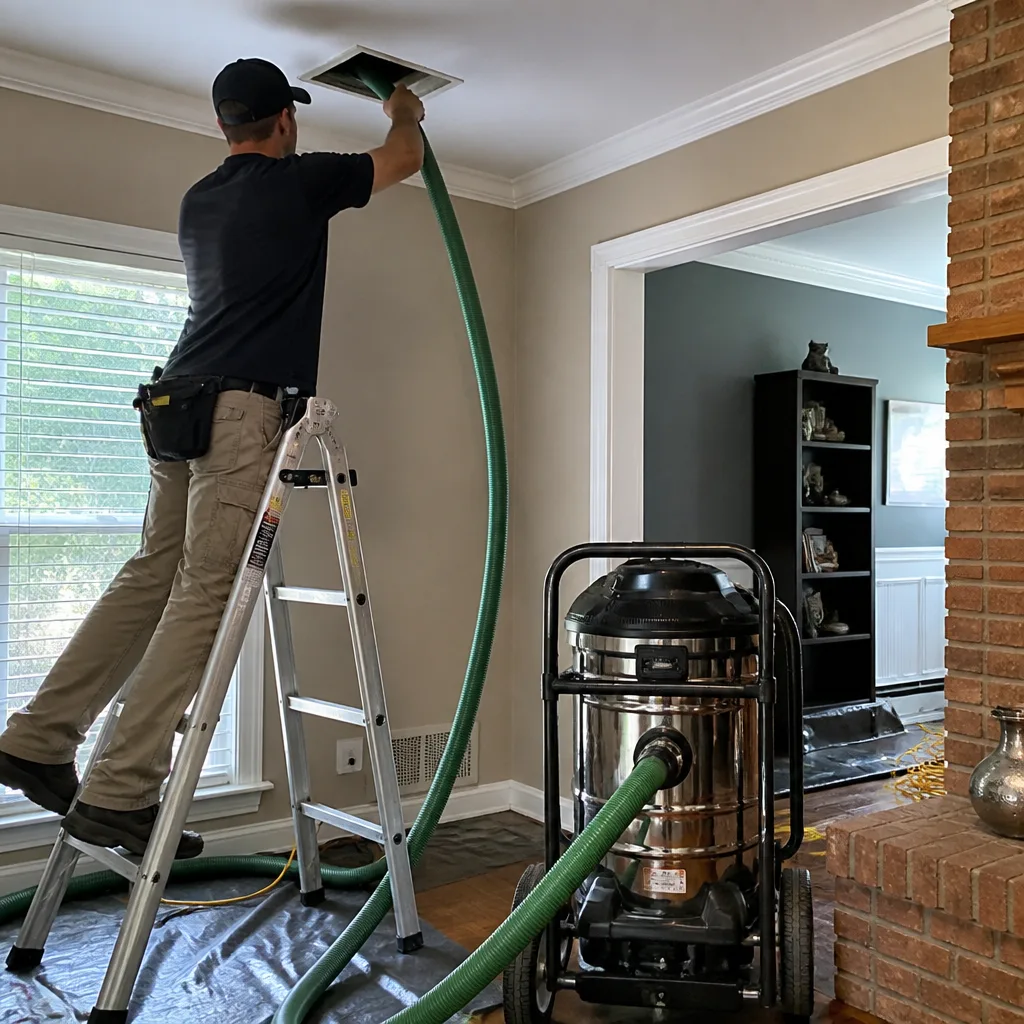
Legitimate air duct cleaning is not a guy waving a vacuum wand inside a register. It’s a controlled process with three stages: agitation, extraction, and containment. Here’s what each one means in plain English.
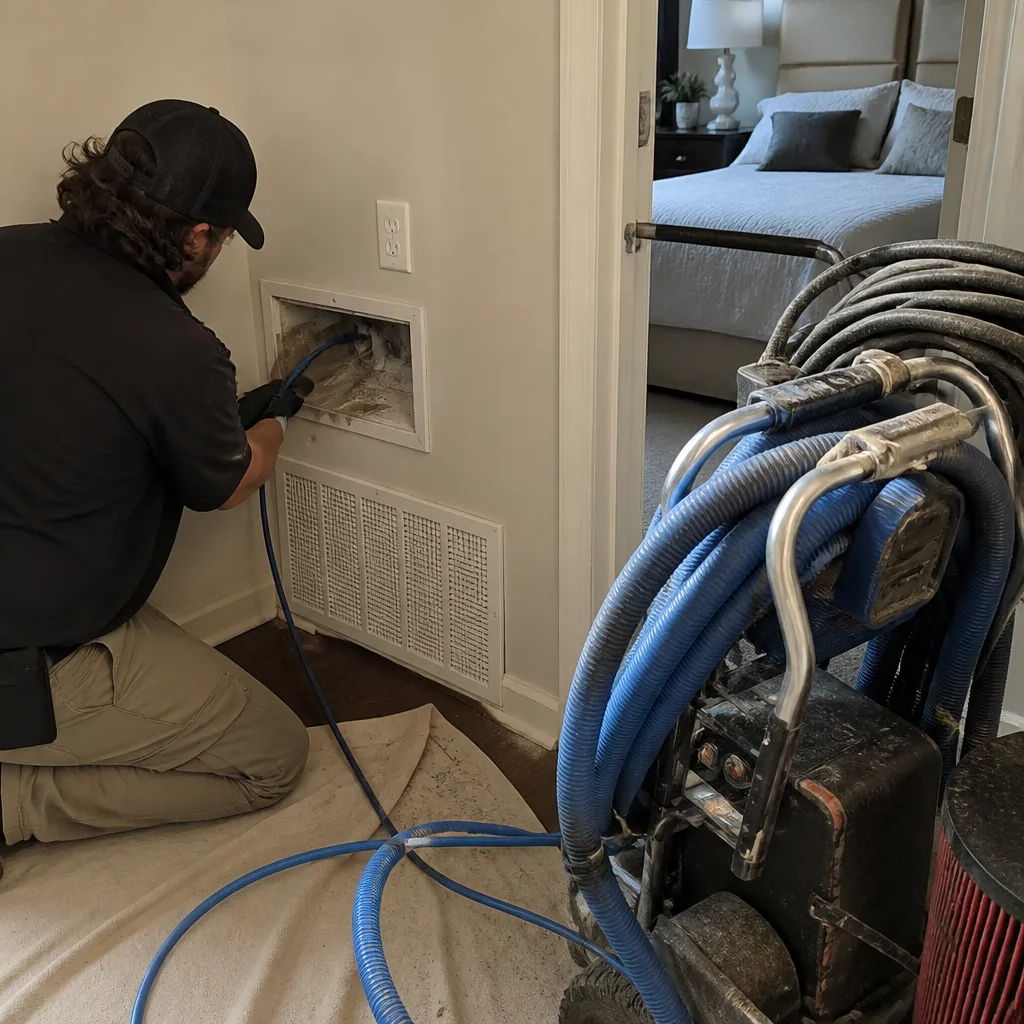
- Agitation (Rotobrush or similar rotary brush systems): A spinning brush is fed through the duct to physically scrub the walls and dislodge the compacted material – including the clay-paste coating we described earlier. Think of it as a toothbrush for your ductwork. Without agitation, you’re only removing loose surface dust.
- Negative-air extraction (Nikro units): A large HEPA-filtered vacuum is connected to the duct system, creating negative air pressure. This is the critical piece – it means the dust being scrubbed loose gets pulled out of the duct and into the vacuum, not blown into your living room. The “negative” part means air is drawn into the system at every open point, so loosened particles can’t escape into the house.
- Containment (Abatement Technologies HEPA filtration): During the cleaning, HEPA-filtered air scrubbers keep the work area isolated. After cleaning, all access points are sealed and registers are replaced. When we leave a Marietta home, the supply registers should look the way they looked when we arrived – minus the dust inside.
We name the equipment – Rotobrush for agitation, Nikro for extraction – because homeowners deserve to know what’s actually being brought into their home. A box-store shop vac can’t create negative air pressure. It just moves dust around. If a contractor can’t name their equipment, that’s a signal.
The NADCA Standard and Why It Matters
NADCA – the National Air Duct Cleaners Association – publishes the ACR standard, the closest thing this industry has to a technical baseline. It specifies minimum equipment requirements, cleaning procedures, and verification standards. Any contractor you consider in Marietta should be able to tell you they follow the NADCA ACR standard without pausing.
Here’s what the standard means in practical terms:
- Source removal, not surface cleaning: The system must be cleaned to the point where debris is physically removed from the duct walls, not just loosened. Post-cleaning inspection should show surfaces free of visible debris.
- All access points, not just registers: Ducts should be accessed and cleaned from multiple points, not just through the supply registers. This includes the main trunk line and return plenum.
- Verification: The contractor should show you before-and-after photographs of your actual ductwork, taken from inside the system. Not stock photos. Not “representative examples.” Your ducts.
The ACR standard is not a license or a certification. It’s a protocol. But a contractor who follows it is working to a defined standard, and a contractor who’s never heard of NADCA is probably not going to deliver the level of cleaning you’re paying for. For a deeper look at what this means in practice, see our guide to Air Duct Cleaning in Marietta.
The Decision Tree: Clean Now, Wait, or Call an HVAC Tech First
Here’s the practical guide we give friends and neighbors in Marietta when they ask whether it’s time. Three paths:
Clean now – if you can answer yes to any of these:
- Visible mold growth inside the ducts, on the registers, or around the grilles (confirmed by sight, not just a musty smell)
- Rodent or insect activity: droppings, nesting material, unexplained scratching sounds from the vents
- Construction or renovation dust from drywall sanding, flooring, or demolition that entered the system (a common situation in Marietta’s active renovation market)
- Measurable airflow restriction at the register that persists after a filter change
- An unexplained dust recurrence on surfaces within days of cleaning, pointing to the ducts as a persistent source
Wait – if these describe your situation:
- Fine, loose dust visible when you peek through the register. That’s normal. Change your filter, run the system, check in 30 days.
- A recommendation from a coupon mailer or cold caller with no inspection. Anyone who quotes a price without looking at your system isn’t quoting a real number.
- General “indoor air quality” anxiety without a specific observation. If you can’t point to something, you’re not ready.
Call your HVAC technician first – not a duct cleaner:
- Weak airflow at every register in the house, not just one branch
- Unusual sounds from the air handler: grinding, screeching, or vibration
- Excessive condensation or standing water near the indoor unit
- A system that short-cycles or runs constantly without reaching the set temperature
These are mechanical failures. Cleaning the ducts won’t fix a dying blower motor or a refrigerant leak. A legitimate contractor should tell you that. If the first company you call recommends cleaning without assessing the HVAC unit itself, that’s a red flag in Marietta’s market and everywhere else.
How a Legitimate Inspection and Written Quote Should Be Structured
Before any work starts, a real inspection should happen. Not a phone estimate. Not a picture you text. An actual person looking at your actual system. Here’s what that looks like when done right, step by step.
- Visual inspection of registers and returns: The technician removes a few covers and looks. If you have a flex-duct system in the attic (common in Marietta homes built after 1980), they should be willing to look at the attic-side access points, too.
- Camera inspection of the main trunk: A snake-mounted camera goes into the central line. This is the only way to see what’s actually there. If a company can’t show you footage or stills from inside your own ducts, they don’t know what they’re cleaning.
- Written quote, line by line: You should see – in writing – the number of vents, the scope of cleaning (supply side, return side, main trunk, plenum), the equipment being used, and the total price. No asterisks. No “additional fees may apply.” If the quote isn’t itemized, it isn’t a quote.
- A defined arrival window: Not “sometime between 8 and 5.” A specific two-hour window, and a phone number that gets answered if something changes. Calls answered by a live person, any time of day, are the baseline – not a perk.
We’ve built our whole business on this structure. The written quote is in your hand before any equipment comes off the truck. That’s the Kingswell Guarantee standard, and it’s the same standard applied to every job since 2004. There’s no version of this industry where the price should be a surprise after the van is parked at your curb.
Common Mistakes to Avoid
- Falling for the $49 whole-house coupon. That number exists to get a technician through your door. The real invoice will be five to ten times that, justified with “conditions they couldn’t see from the phone.” In Marietta, where summer humidity is a convenient villain, this play works all year.
- Accepting “blow-and-go” cleaning. Some companies attach a compressor line and blow air through the ducts, calling it cleaning. That loosens debris and blows it into the living space. Negative-air extraction exists for a reason. If they don’t use it, they’re not cleaning – they’re distributing.
- Paying extra for “sanitizing” fog without proof of biofilm. Antimicrobial fogging is a profit line item, not a necessity, unless there’s specific biological contamination. If the technician can’t show you what they’re treating, you’re paying for scented air.
- Cleaning ducts without checking the filter situation first. If you run fiberglass filters or haven’t changed the filter in a year, the dust will return within months. A 1-inch pleated filter, changed quarterly, is the single most cost-effective indoor air quality move in any Marietta home.
- Skipping the dryer vent while you’re at it. Lint-clogged dryer vents are a fire hazard and a common contributor to whole-house dust. The two services are separate, but they’re often needed together. The Dryer Vent Cleaning in Marietta page covers what that involves and why it matters.
- Believing the ducts are self-cleaning. They aren’t. Every HVAC system pulls air through a filter, but the filter captures only a fraction of what passes. Over years, the rest deposits on duct walls. The question is never whether there’s dust – it’s whether the dust has reached a point of consequence.
When to Call a Professional
You need a professional when you can see something specific: mold on a register, droppings in the return, a camera showing matted debris in the trunk line, or airflow that stays weak after you’ve changed the filter. You also need one after major construction that ran without the system sealed off. These are the moments where a real cleaning changes the air you breathe. If you’re in Marietta and want a straight answer, Kestrel Air Duct Marietta offers free estimates – call (762) 533-6494 and we’ll give you a written price before anything is opened.
Frequently Asked Questions
Most homes in Marietta run between $350 and $650 for a full system cleaning, with larger or heavily contaminated systems running higher. The price should be written down and fixed before work starts. Call (762) 533-6494 for an exact quote – estimates are free.
There’s no schedule. The EPA doesn’t publish one, and neither should any honest contractor. Most Marietta homes go five to ten years between legitimate cleanings, and many never need one at all. Clean when you see specific evidence – mold, pests, construction debris, or measurable airflow loss – not on a calendar.
Cheaper quotes almost always mean one of three things: a blow-and-go cleaning with no negative-air extraction, a teaser price designed to be upsold, or uninsured labor with rented equipment. The equipment required for real source removal (Rotobrush agitation, Nikro extraction, HEPA containment) costs money to operate, and that cost shows up in an honest quote.
Ask for before-and-after photos from inside your own ducts, taken during the same visit. A legitimate contractor will have no problem providing them. At Kestrel Air Duct Marietta, we document every job this way – the Kingswell Guarantee includes the proof in writing, along with the price and the promise.
It can, if the ducts are genuinely contaminated with biological material – mold, pollen reservoirs, or pest byproducts. If you have a clean system and seasonal allergies, the better investment is a high-efficiency filter, or a whole-house filtration product like a Honeywell or Aprilaire unit. Cleaning won’t change what’s blooming outside.
Yes, with negative-air extraction and proper containment. The air pressure in the ducts is maintained below the air pressure in the living space, so loosened particles flow into the vacuum, not the room. Abatement Technologies HEPA filtration units keep the work area isolated. When we leave, the floor is as clean as when we arrived.
They’re two separate services on two separate systems. Air ducts carry conditioned air through your home; the dryer vent carries hot, lint-laden air from your dryer to the outside. Both matter, but for different reasons. Air duct cleaning addresses indoor air quality and airflow. Dryer vent cleaning addresses fire risk and dryer efficiency. Our Dryer Vent Cleaning in Marietta page covers the dryer side in detail.
The Bottom Line
Marietta homeowners have every right to be skeptical of the air duct cleaning industry. The bait-and-switch pricing exists. The blow-and-go jobs exist. The unnecessary cleanings exist. But so does legitimate work – the kind that removes real contamination, restores airflow, and leaves you with photos of your own ductwork as proof. The key is treating a cleaning decision the way you’d treat any other home repair: look for visible evidence, demand a written price, ask about equipment, and walk away from anyone who can’t answer the questions. If you’d rather talk to someone directly, Kestrel Air Duct Marietta is here – (762) 533-6494 – and the price is in writing before the work begins.
Written by Dale Whitmore, Owner at Kestrel Air Duct Marietta, serving Marietta since 2004. Explore more guides & resources on keeping your home’s air clean.
See the difference
 Before
 After
After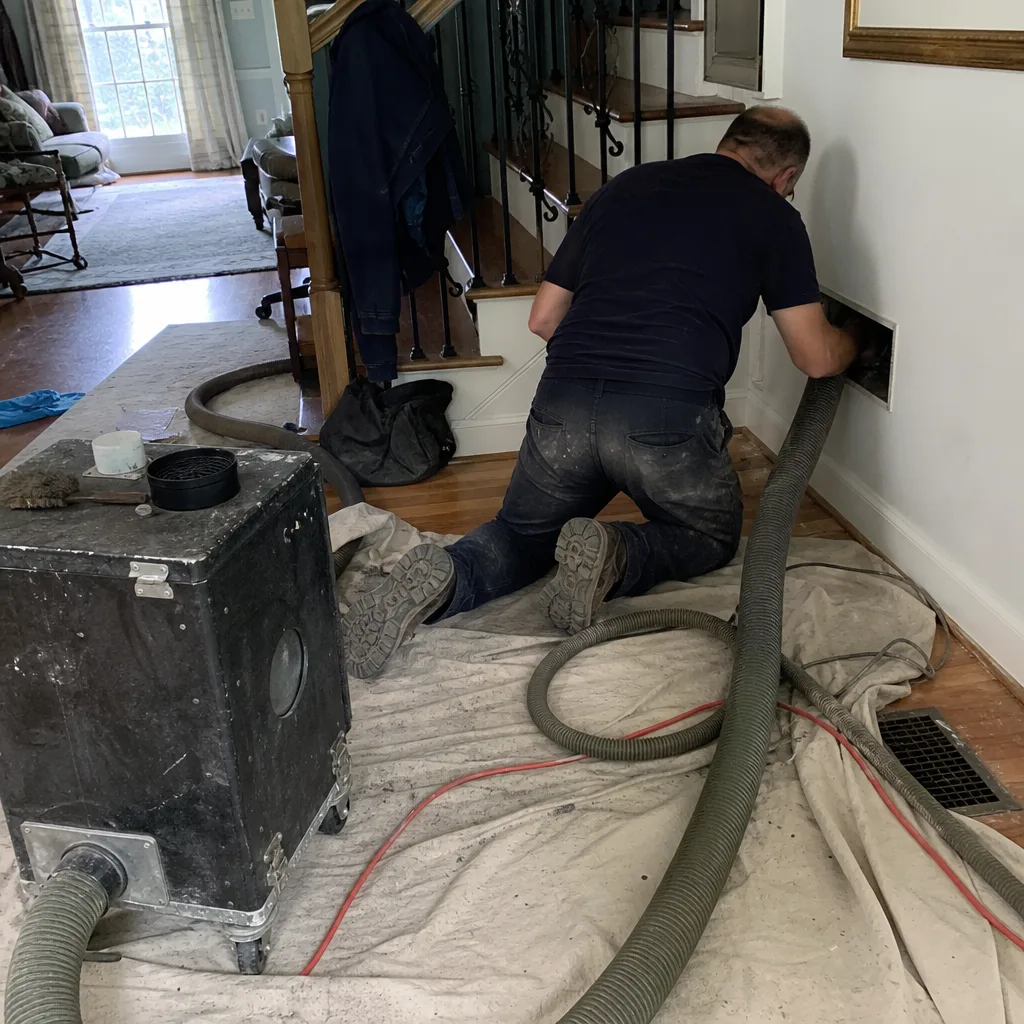 Before
 After
After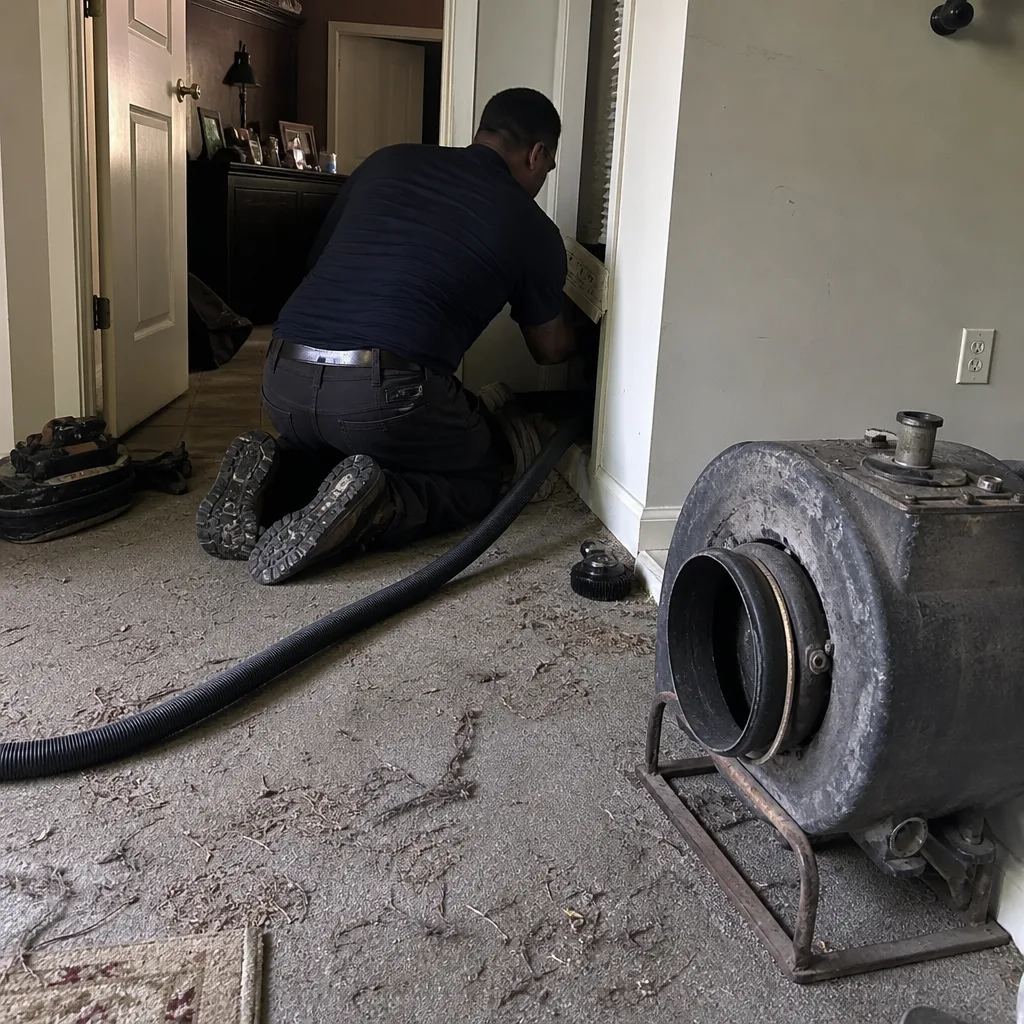 Before
 After
After