
Last updated October 15, 2026
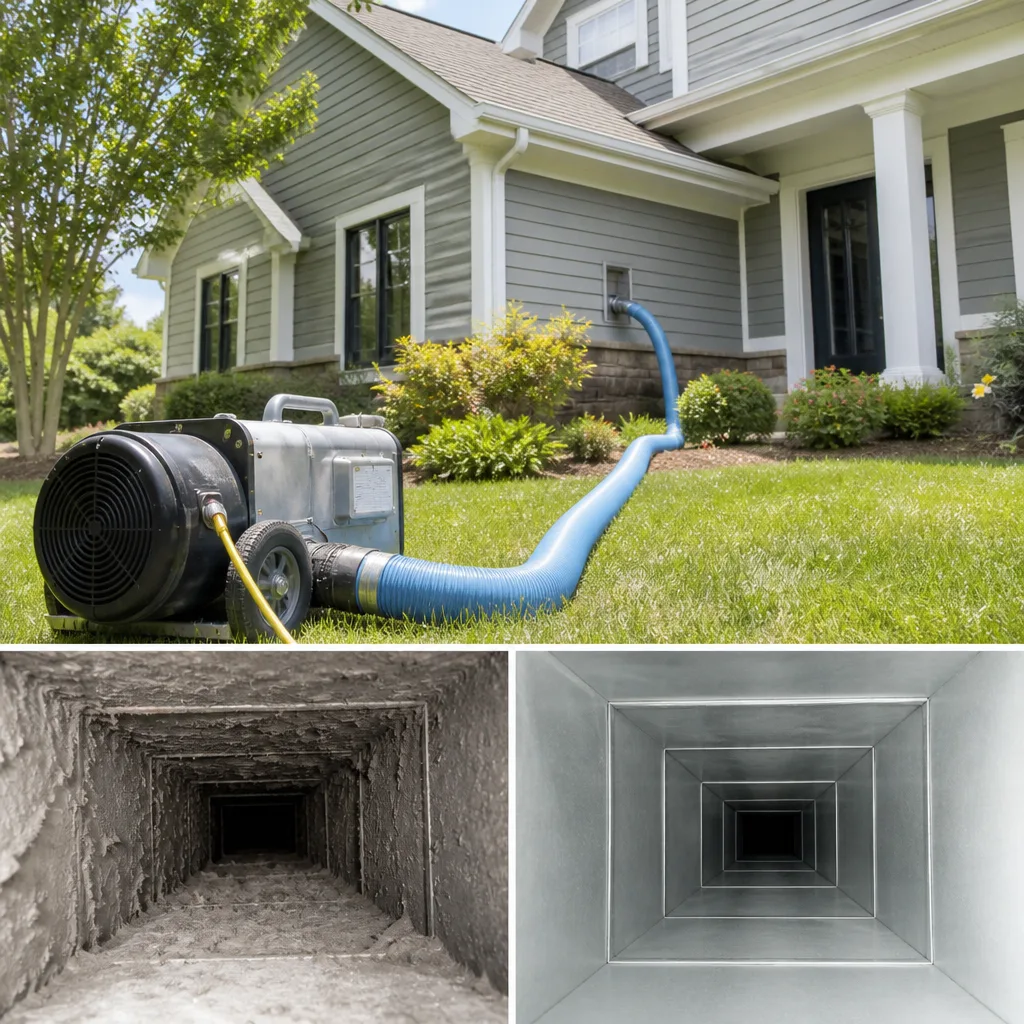 Whole-home duct cleaning
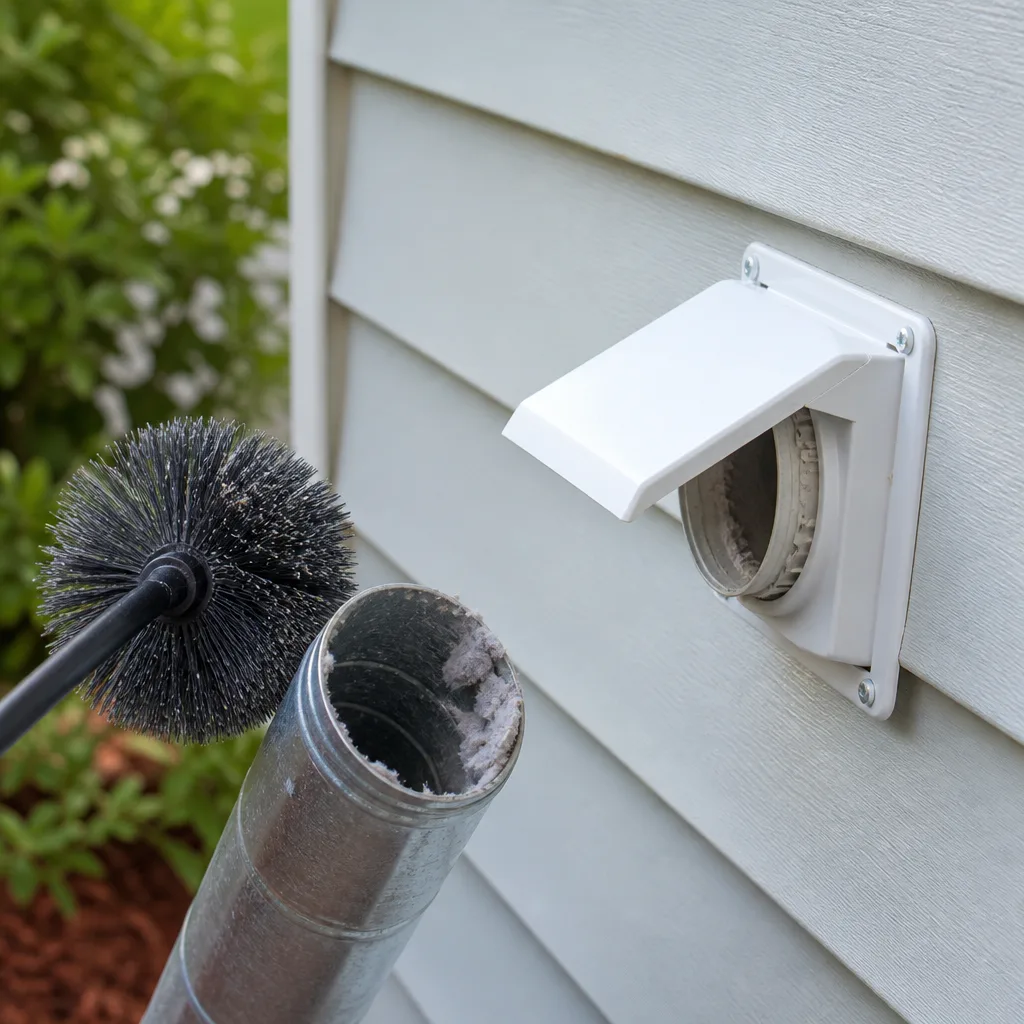 Dryer vent cleaning
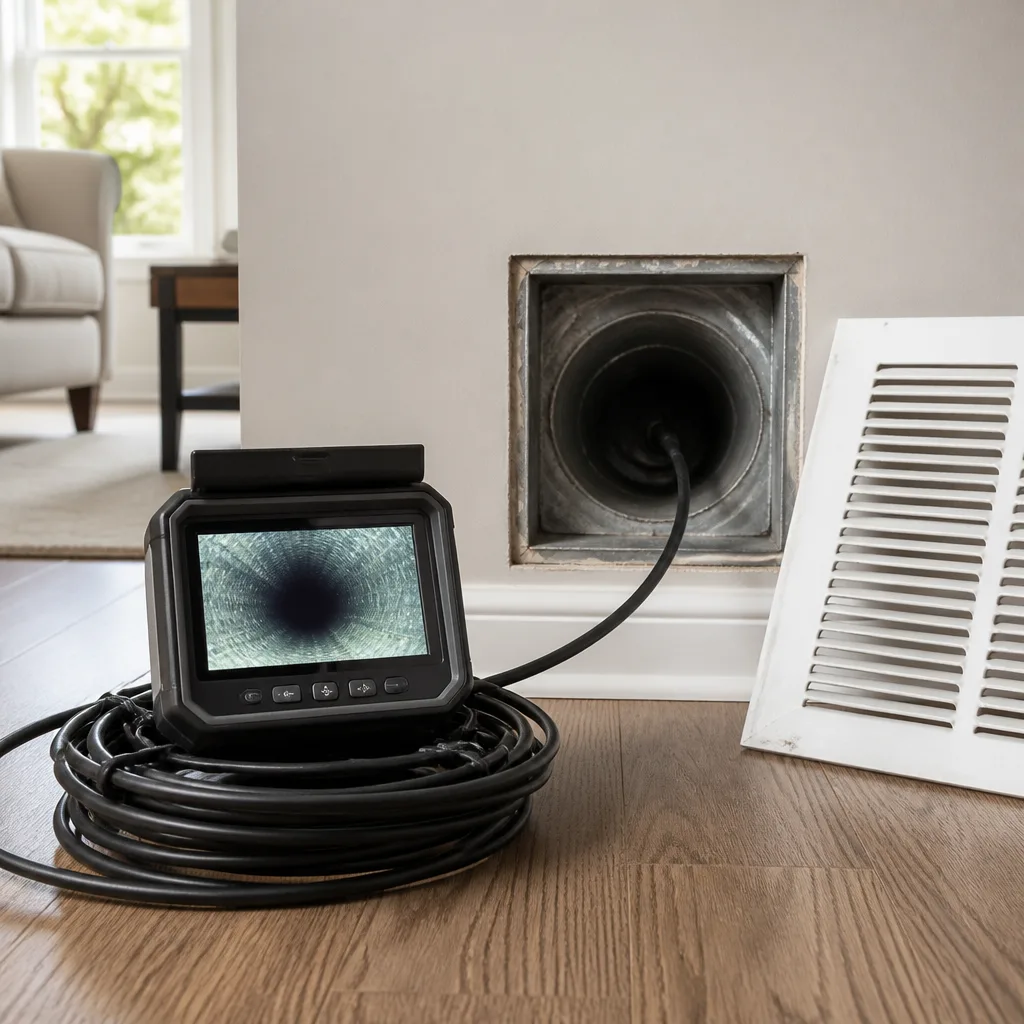 Camera inspection
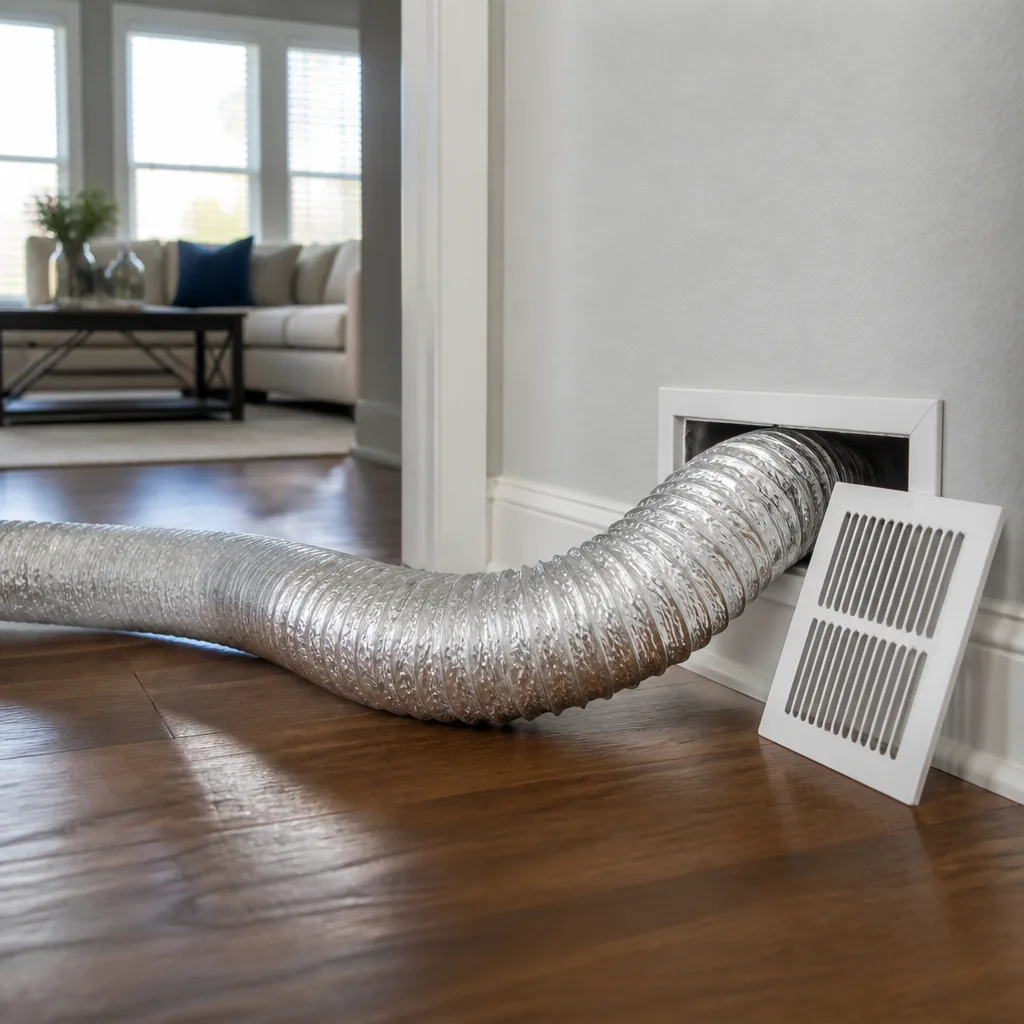 Sanitizing & deodorizing
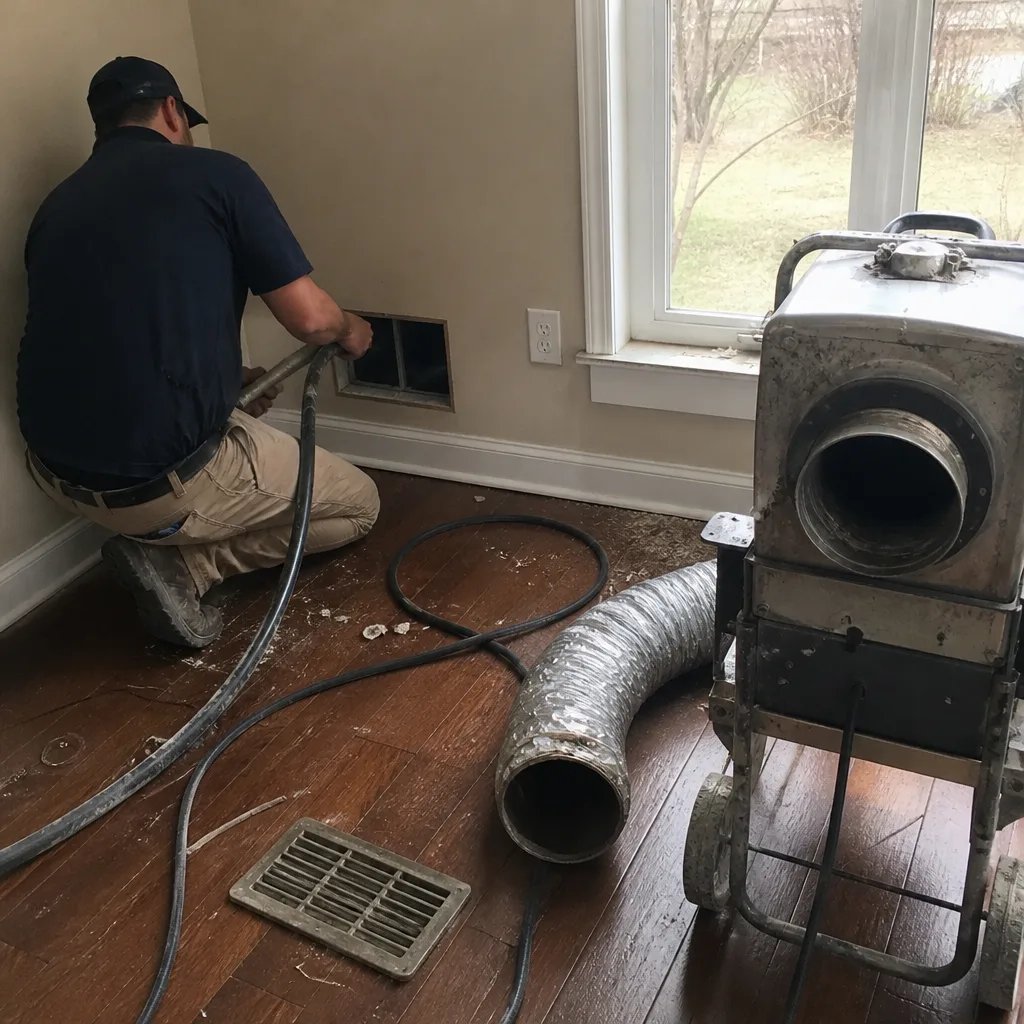
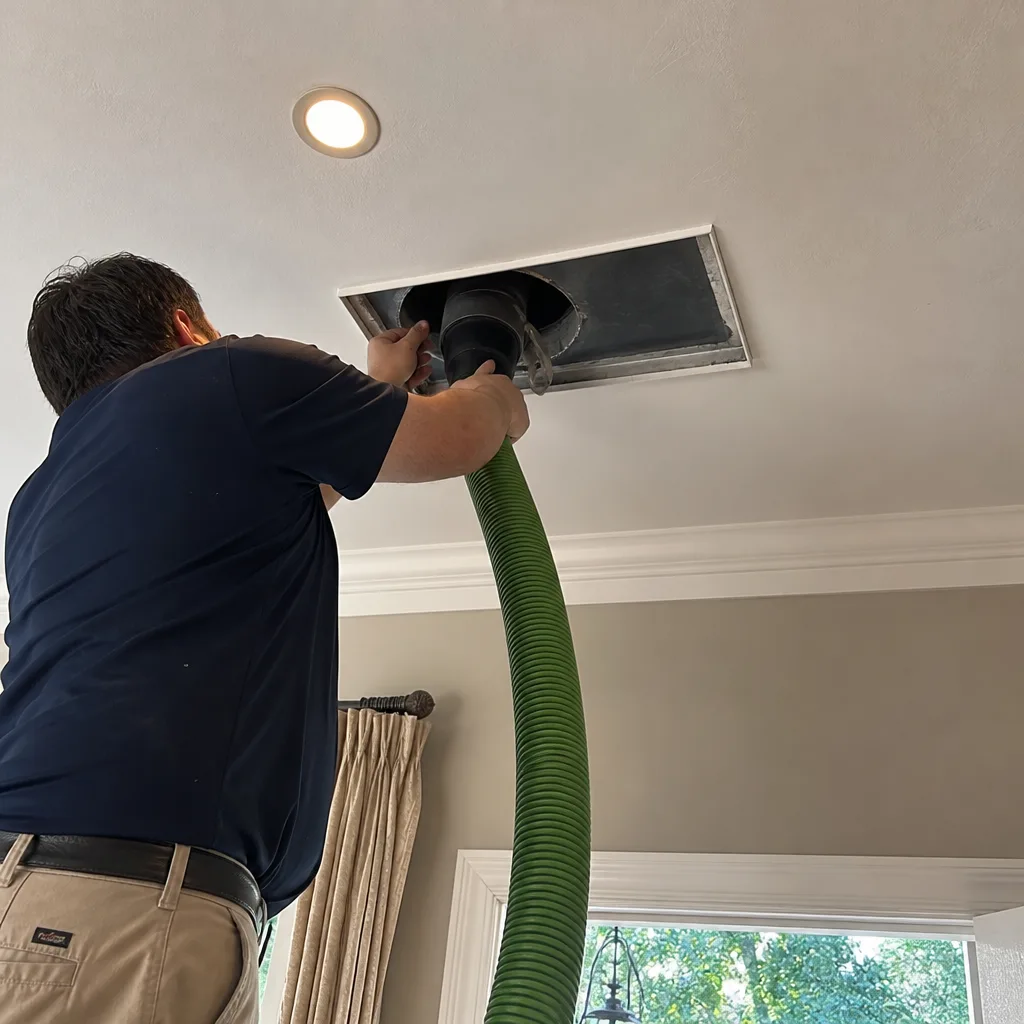
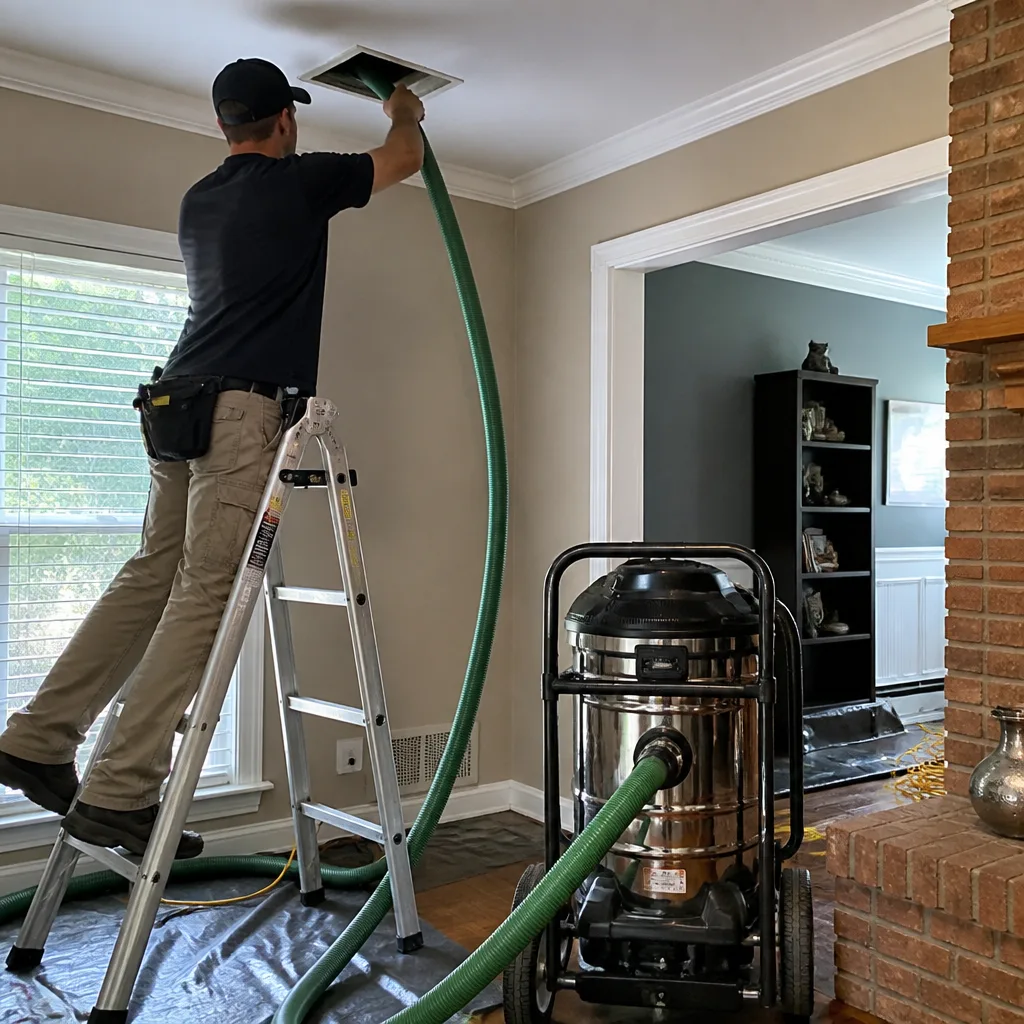
Whole-system duct and dryer vent check with before-and-after photos - you see exactly what came out of your vents
That "$99 whole-house special" is a bait ad - the real number appears once they are in your hallway, or the "clean" is a shop-vac at the register. We photograph the inside of your ducts before and after instead.
Air Duct Cleaning Maintenance Checklist for Marietta Homeowners
Changing your filter on a schedule without checking the duct register first is like changing your car’s oil without looking at the dipstick. The interval is a guess, and in Marietta’s summer humidity it’s often the wrong one. Plenty of local homeowners swap a filter every 90 days and still end up with dust filming their furniture by August, because the real problem is 20 feet down a duct run. This guide gives you a ten-minute monthly routine built for Cobb County conditions, not a generic national template. You’ll learn what to inspect, what to photograph, and what actually signals it’s time to call a professional for our Air Duct Cleaning services.
Styles & brands we work with
Quick Answer
An effective air duct maintenance checklist for Marietta homeowners is a monthly ten-minute observation routine covering supply registers, the return-air grille, the filter, the blower cabinet, and visible duct runs. The goal is to spot shifts in airflow, dust patterns, and moisture before they turn into restricted airflow or mold. In Marietta’s climate, the most useful checkpoints are pre-pollen season (March), post-humidity season (October), and after holiday cooking (January).
Table of Contents
- The Room-by-Room Register Check: Ten Minutes, Five Signals
- Return-Air Grille Checks: What Filter Bypass Looks Like in Marietta Homes
- Seasonal Checkpoints for Marietta’s Calendar: March, October, January
- The Observation Log: How to Track Changes Without Special Tools
- What to Photograph and Keep on File
- Moisture, Must, and the Marietta Humidity Factor
- Common Mistakes to Avoid
- When to Call a Professional
- Frequently Asked Questions
- The Bottom Line
The Room-by-Room Register Check: Ten Minutes, Five Signals
Most Marietta homes have between 8 and 14 supply registers. Checking them all takes less than ten minutes once you know what to look for. Start on the top floor if you have one, then work down. Heat rises, duct leakage compounds over distance, and the registers farthest from the air handler show symptoms first.
Here’s the five-signal check, in the order we use it on service calls:
- Airflow feel at the register face. Hold a tissue or a strip of paper to each register while the system runs. It should flutter, not hang limp. If one room’s register barely moves the paper while others push it horizontal, you’ve got an airflow imbalance. Common in Marietta’s older split-levels and ranch homes where duct runs were extended during later additions.
- Dust pattern around the register lip. Look at the wall or floor surface immediately around each vent. Dark gray smudging on the paint or carpet fibers means air is bypassing the register seal and blowing unfiltered attic or crawlspace air into the room. We see this most often in homes where registers were cut into original hardwood flooring decades ago and the boots have never been resealed.
- Visible dust inside the register throat. Remove one or two registers and look down the boot with a flashlight. A thin, even powdering is normal. Thick clumps, gray fuzz, or anything that looks like dryer lint is not. That’s the duct system shedding years of accumulated debris into your airstream.
- Temperature difference between rooms. Walk through with bare feet or the back of your hand. If one bedroom stays five degrees warmer than the hallway in July, the problem may not be your AC. It’s more likely a collapsed flex duct or a disconnected run in the attic. Marietta attics regularly hit 130°F in summer, and that heat pulls through any gap in the duct system.
- Sound changes. A register that whistles or hums when other rooms are quiet usually signals a damper partially closed or a duct that’s getting choked with debris. The sound is the system working harder than it should.
Run through this list once a month, same time of the month so you remember, and you’ll catch most duct problems before they show up as a repair bill. If you want a more thorough look at what professional cleaning involves, our Air Duct Cleaning in Marietta page walks through the full process, including the equipment and the flat-rate pricing.
Return-Air Grille Checks: What Filter Bypass Looks Like in Marietta Homes
The return-air grille is the intake side of your HVAC system. Everything it pulls in goes through the filter, then the blower, then back out through the supply side. When the return side has problems, every room in the house feels the effect.
Two signs at the return-air grille tell you the filter is undersized or bypassed, and we see both regularly in older Marietta split-levels where a second floor was added without upgrading the original return system:
- Dust accumulation on the grille fins themselves. If the grille’s metal fins are coated in gray fuzz while the filter is only moderately dirty, air is leaking around the filter. The filter is either the wrong size, installed in a sloppy filter slot, or a cheap 1-inch fiberglass filter that lets fine particles slip through. The grille becomes the filter.
- Suction that’s weak or uneven across the grille face. Place your palm flat against the grille. You should feel a firm, even pull. If the pull is strong in one corner and weak everywhere else, the filter is partially blocked or the return duct behind it is collapsing. This matters year-round in Marietta, but especially in August when the system runs 14 hours a day.
While you’re at the return grille, look at the filter itself. A filter that’s uniformly dirty across its surface is working. A filter that’s dirty in one rectangle and clean elsewhere is bypassing air. And if you pull the filter out and find dust layered on the blower cabinet behind it, the system has been running with unfiltered air long enough to coat internal components. That’s the point where a professional cleaning of the entire Kestrel Air Duct Marietta home system is the honest next step, because a new filter alone won’t undo the buildup already inside the blower and evaporator coil.
Seasonal Checkpoints for Marietta’s Calendar: March, October, January
Georgia’s climate doesn’t match the national spring-fall checkup template. Marietta’s pollen season starts in earnest by mid-February and runs hot through April. Humidity builds from June through September. Holiday cooking season runs from Thanksgiving to New Year’s. A practical maintenance checklist follows the local calendar, not the equinoxes.
March: Pre-Pollen Check
The yellow pine pollen that blankets Cobb County every spring doesn’t stay outside. It rides in on clothes, pets, and the air itself. Before the pollen peak hits, do this:
- Inspect and replace the primary filter if it’s been more than 60 days. Consider a higher-MERV filter for the pollen season, but verify your system can handle the added resistance.
- Check all supply registers for last winter’s dust deposition, especially in rooms that stayed closed.
- Run the fan-only setting for ten minutes and walk the house smelling for anything stale. Dust that settled during winter gets re-suspended the first few times the system runs in spring.
- If you use Aprilaire or Honeywell filtration products, confirm they’re seated correctly and the seals are intact before pollen arrives.
October: Post-Humidity Check
Marietta’s summer humidity is the biggest single driver of duct problems. Warm, moist air in unconditioned attics and crawlspaces condenses on cool duct surfaces all season long. By October, the damage shows up clearly.
Walk the house and look for:
- Musty odor from supply registers when the fan kicks on
- Dark spots or staining on ceiling tiles near registers
- Register hardware showing surface rust
- Increased dust accumulation on horizontal surfaces since summer began
These are the fingerprints of moisture in the duct system. If you spot them, don’t wait for spring. October is the ideal window to have the system professionally cleaned and inspected while the weather is mild and before the furnace starts running daily. For what to expect from local requirements, see Air Duct Cleaning Permits, Codes & Inspections in GA: What You Need to Know.
January: Post-Holiday Cooking Check
Holiday cooking pulls grease, smoke, and fine particulates through the kitchen return and into the ductwork. If you hosted Thanksgiving and December gatherings, January is the time to check:
- Kitchen register and nearby return grille for sticky residue. Grease coating on metal fins catches dust and accelerates buildup.
- The filter, which may darken faster after heavy cooking seasons.
- The blower cabinet sight glass or access panel for visible particulate film.
- Any room where you burned candles heavily. Candle soot is finer than dust and moves through the system easily.
For Marietta homeowners, these three checkpoints catch most issues before they become expensive. If you also have a dryer, see our companion guide to Dryer Vent Cleaning in Marietta, which covers the lint-buildup indicators specific to local laundry room layouts.
The Observation Log: How to Track Changes Without Special Tools
Most homeowners rely on memory, and memory is unreliable when changes happen slowly. A simple observation log gives you a factual baseline. When a contractor recommends a $900 duct replacement, your log tells you whether the system’s condition actually changed or the recommendation is based on guesswork.
Open a note on your phone or keep a small notebook near the thermostat. Once a month, record:
- Date and outdoor conditions. Note if it’s been unusually dry or muggy. Humidity affects how dust behaves.
- Filter replacement status. When you changed it last, what MERV you used.
- Any register that felt weak. Note the room and whether the weakness changed from last month.
- Any new odor. Describe it plainly: stale, musty, dusty, burning, chemical.
- Dust level observations. Which rooms needed dusting since last check? Was it lighter or heavier than the month before?
- Anything you photographed. Date and location, so photos in your phone stay organized.
The log doesn’t need to be detailed. Three or four lines per month is enough. What matters is continuity. After six months, you’ll have a clear picture of whether your system is stable or trending toward a problem. And if you call us for Air Duct Cleaning in Marietta, that log helps our technicians diagnose faster and gives you a factual basis for evaluating what we find.
What to Photograph and Keep on File
Photographs are the cheapest verification tool a homeowner has. Before any duct work, during the work, and after the work, photos establish what actually existed and what changed. They also give a written guarantee something to stand on.
Here’s what to photograph as part of your maintenance routine:
- The filter, both sides, every time you replace it. This creates a visual record of how quickly it loads. Six months of filter photos tells you more than any guess about whether your house has an unusual dust load.
- The inside of a supply boot whenever you remove a register. Use your phone’s flashlight. The camera sees more detail than the eye at arm’s length.
- The return-air grille and surrounding wall. Staining, dust smudging, and grille condition all change slowly. Photos document that change.
- Any moisture staining or rust you find, with date and location noted. If the staining expands, you have proof of an active problem.
- Post-cleaning interior shots if you have the ducts professionally cleaned. A company should be willing to show you before and after photos of your own duct interiors. If the 365-Day Done Right Promise is ever invoked, those photos document what was done and what the interior looked like at the time of service.
Store these in a dedicated album on your phone so they’re not buried in your camera roll. When you eventually have the system serviced, bring up the album. A technician who can see the duct interior’s condition over time can diagnose faster and with more confidence.
Moisture, Must, and the Marietta Humidity Factor
Marietta’s humidity isn’t a comfort issue. It’s a duct system issue. Summer dew points in the mid-70s mean any unconditioned space holding a cold duct surface becomes a condensation point. Attic ductwork, crawlspace ductwork, even duct chases in exterior walls all carry that risk from June through September.
Your monthly checklist should include a moisture-specific pass during the humid season:
- Check the humidity level in the house. A $15 hygrometer tells you what the system is dealing with. If interior humidity runs above 60% in July, the ducts are pulling moist air through every tiny seam.
- Inspect the registers in the room closest to the air handler. This register moves the coldest air and often shows condensation first. Look for water beading on the register face or the surrounding wall.
- Walk the attic after the AC has run for an hour on a hot day. Look for any duct surface that’s sweating. Bare metal ducts are most visible; flex ducts with exterior condensation feel damp to the touch.
- Check the crawlspace if your home has one. Open the crawlspace door and assess whether the air feels noticeably damper than the house. Crawlspace moisture migrates into ducts through return leaks and supply boots.
- Smell each register after the system has been off for 30 minutes. The first air through the ducts picks up whatever has been growing or decomposing inside. Musty or earthy smells on startup are usually the first indicator of moisture-related contamination.
If condensation is a recurring problem, the fix is rarely just the ducts. Humidity control in the home, insulation on the duct runs, and sealing of the building envelope often need to happen first. But establishing that the moisture is reaching the ducts is the step your checklist is designed to complete.
Common Mistakes to Avoid
- Treating a schedule as a substitute for observation. A 90-day filter change interval assumes average conditions. Marietta pollen season, a summer of 95-degree days, or a home renovation can load a filter in 30 days. Look at the filter before you trust the calendar.
- Ignoring weak airflow in a spare room. Unused rooms mask duct problems. A spare bedroom with a barely breathing register may signal a crushed flex duct in the attic, and the system works harder to push through it every time it runs. The room doesn’t care if it’s empty; the equipment does.
- Using the thickest filter you can find. High-MERV filters add resistance. Not every blower can handle it. An over-restricted system pulls harder on the return side, which increases bypass and can strain the blower motor. Match the filter to the system, not to the best marketing copy.
- Waiting for visible mold before addressing musty smells. By the time mold is visible on a register face, the contamination inside the duct system is established. Musty odor in July is the early warning. The fix is smaller and cheaper in July than it is in November.
- Cleaning registers but not the ducts behind them. Vacuuming a register face makes the visible part clean and leaves the actual problem untouched. Register cleaning without duct interior cleaning is cosmetic.
- Trusting memory over documentation. You’ll convince yourself the dust “wasn’t that bad” last year. Photos don’t have that weakness. Log observations, photograph filters, and keep the file.
When to Call a Professional
Your checklist is designed to catch problems early, but it can’t clean the duct system. Call a professional when you see thick debris inside the supply boots, when you find moisture staining or condensation on duct surfaces, when musty odor returns within days of replacing the filter, or when half the house has strong airflow while the other half stays stagnant. These signals mean the issue is inside the duct system, not at the registers. Kestrel Air Duct Marietta offers free estimates in Marietta – call (762) 533-6494 and we’ll assess what’s showing up in your system and give you a written price before any work begins.
Frequently Asked Questions
Most Marietta homes benefit from professional air duct cleaning every 3 to 5 years, with the interval shortening to 2 to 3 years if you have shedding pets, recent renovation work, or a household member with significant allergies. The frequency isn’t a fixed number – it depends on what your monthly checklist shows. If the supply boots collect thick debris within months of a cleaning, the building is generating more particulate than the system can manage between services. Call (762) 533-6494 for an assessment if you’re unsure where your system falls.
Professional air duct cleaning in Marietta typically runs between $400 and $1,200 for a full system, depending on home size, number of returns, and level of contamination. Some homes fall outside that range. What matters more than the headline number is whether the price is fixed in writing before work starts and what it includes. We give every customer a written quote before touching a vent – no per-vent upselling, no door-step revisions. For an exact quote on your system, call (762) 533-6494; estimates are free.
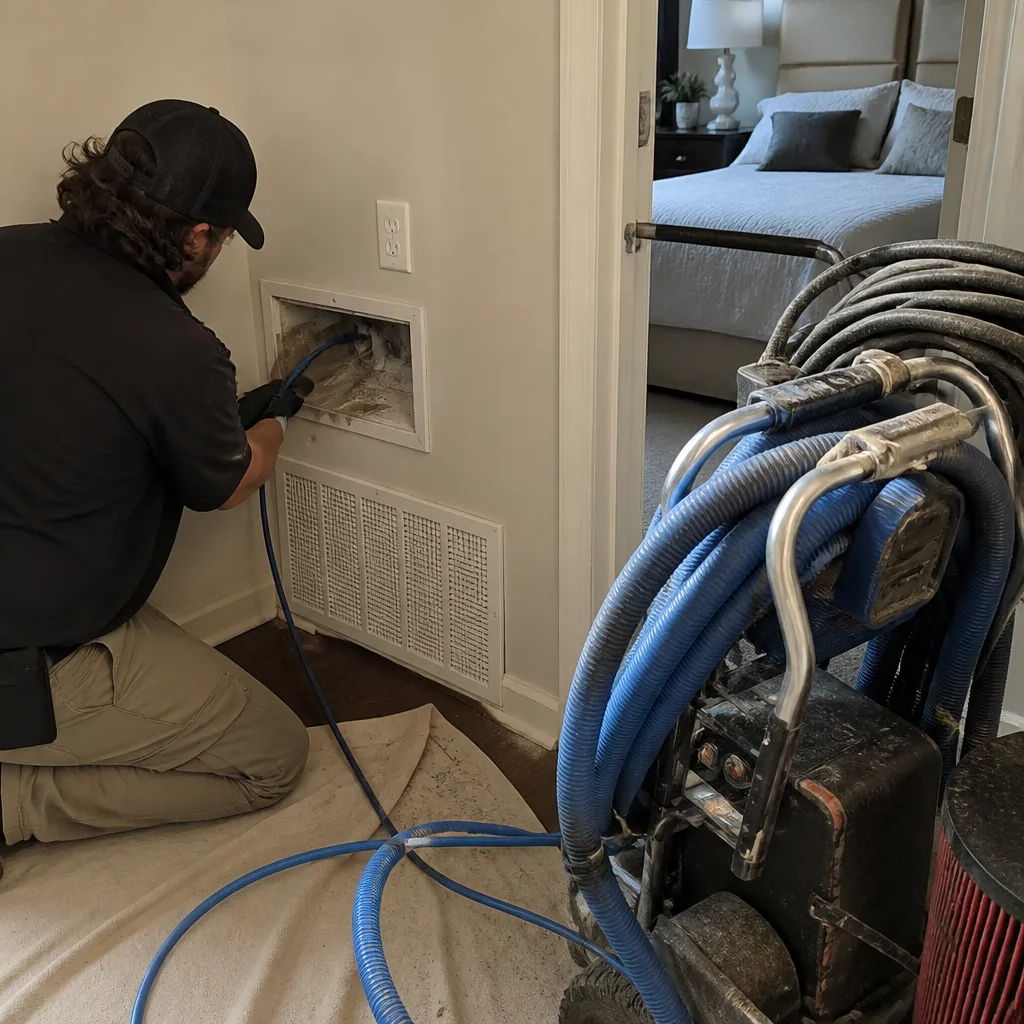
Insist on before-and-after photos of your own duct interiors, taken by the technician during the job. A legitimate cleaning company can show you the duct wall and inside the boots before and after the work. Also ask what equipment was used. Rotobrush rotary brush systems physically agitate debris off the duct walls, while Nikro negative-pressure units pull loosened material out of the system under vacuum. Both are professional-grade tools. A shop-vac with a long hose is not equipment designed for the job.
Cheap quotes in the duct cleaning industry usually mean a limited scope: one technician, basic equipment, a fast pass through the main trunk line, and minimal attention to individual supply runs. Some low-price operators then upsell aggressively once in the house. A thorough cleaning of a full Marietta duct system involves professional equipment, time, and verification – none of which comes at a $99 whole-house price. When comparing quotes, ask what’s included, what equipment is used, and whether the price is fixed in writing before work begins.
The 365-Day Done Right Promise is a written guarantee covering the air duct cleaning work we perform. If the work falls short within the guarantee period, we return and make it right at no charge. It’s documented in writing on every job, not extended at our discretion. The promise is part of the Kingswell Guarantee, the same standard applied to every job Kestrel has performed since 2004.
You can clean the visible portions of your registers and boots with a regular vacuum, but the duct system behind them is a different matter. Residential duct runs extend 10 to 40 feet through attics and between floors. Reaching the interior surfaces requires professional rotary brush systems and negative-pressure extraction equipment that pulls loosened debris out of the system instead of pushing it into your living space. What you can and should do yourself is the monthly observation routine described in this guide, which tells you when it’s time to call a professional.
The Bottom Line
A maintenance checklist for Marietta homeowners is about watching, not cleaning. The ten-minute monthly routine catches airflow imbalances, return-side bypass, moisture intrusion, and progressive dust buildup while the fixes are still manageable. Photographs and a simple log create documentation that strengthens your position with any contractor and gives written guarantees like the 365-Day Done Right Promise something to stand on. Most importantly, the routine fits Marietta’s actual calendar: pre-pollen in March, post-humidity in October, and post-cooking in January. When the checklist points to a problem inside the ducts, call (762) 533-6494 for a free estimate and a written price before any work begins.
Written by Dale Whitmore, Owner at Kestrel Air Duct Marietta, serving Marietta since 2004.
See the difference
 Before
 After
After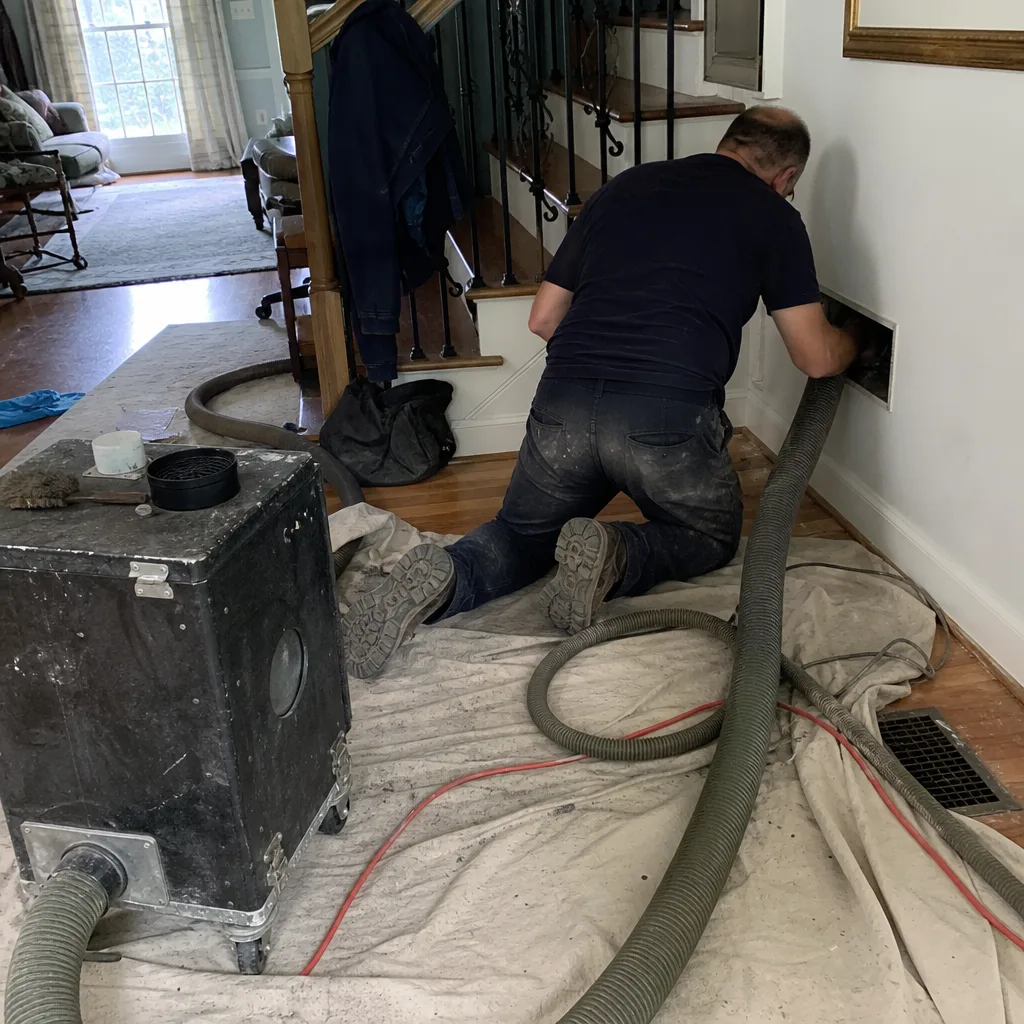 Before
 After
After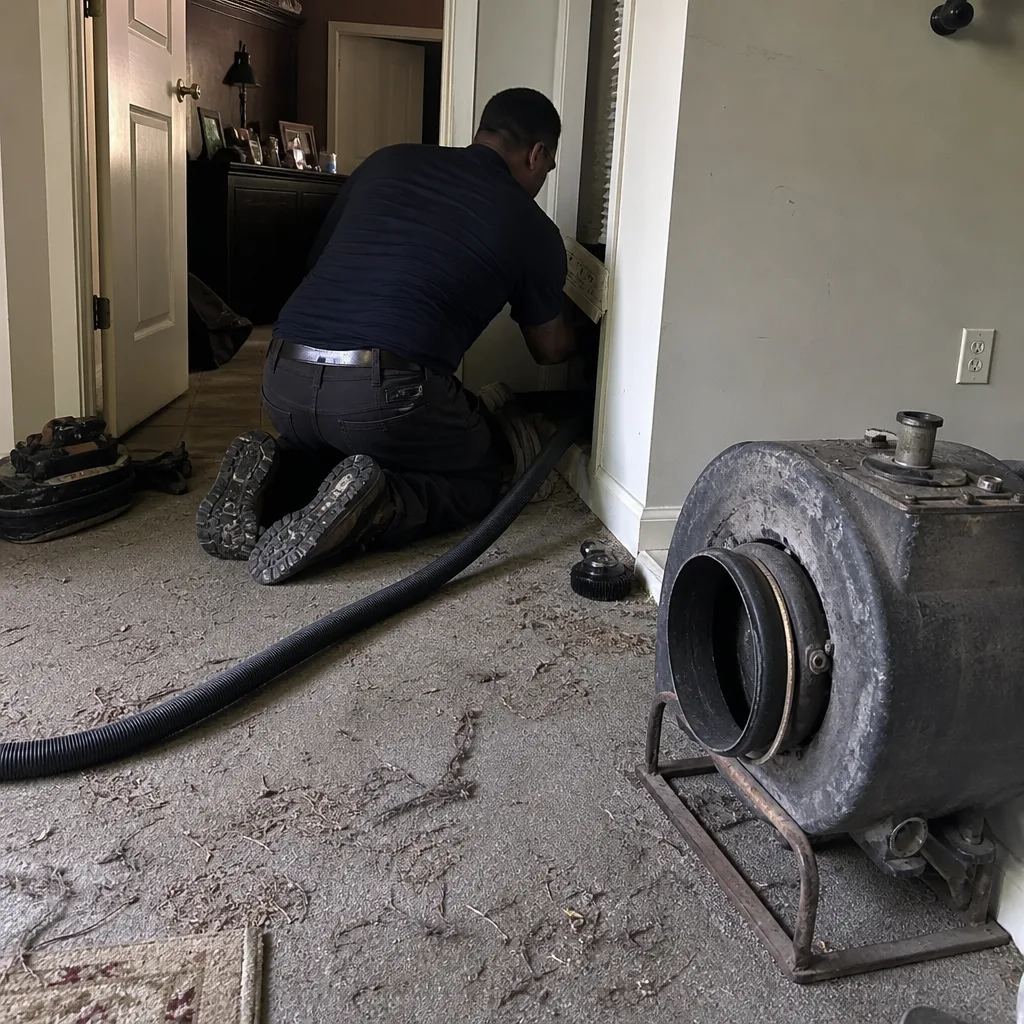 Before
 After
After