
Last updated October 15, 2026
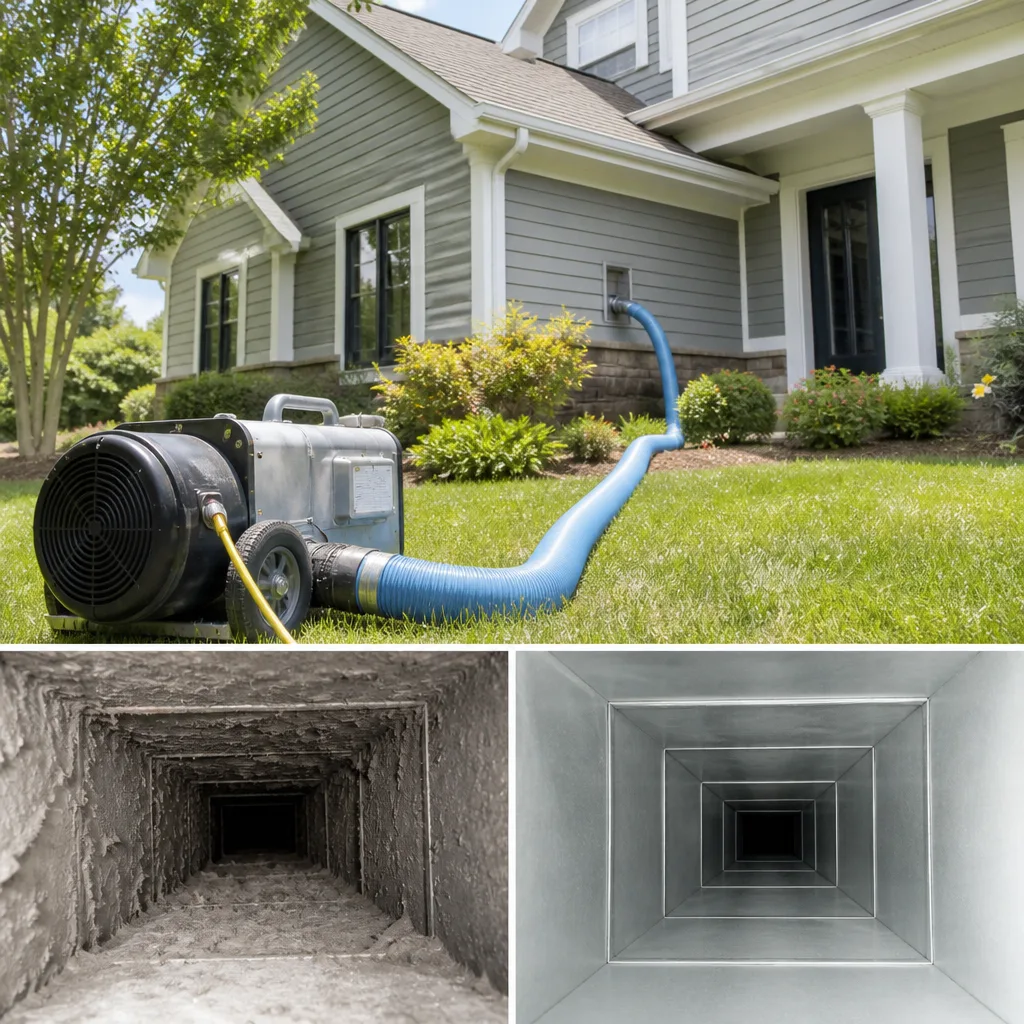 Whole-home duct cleaning
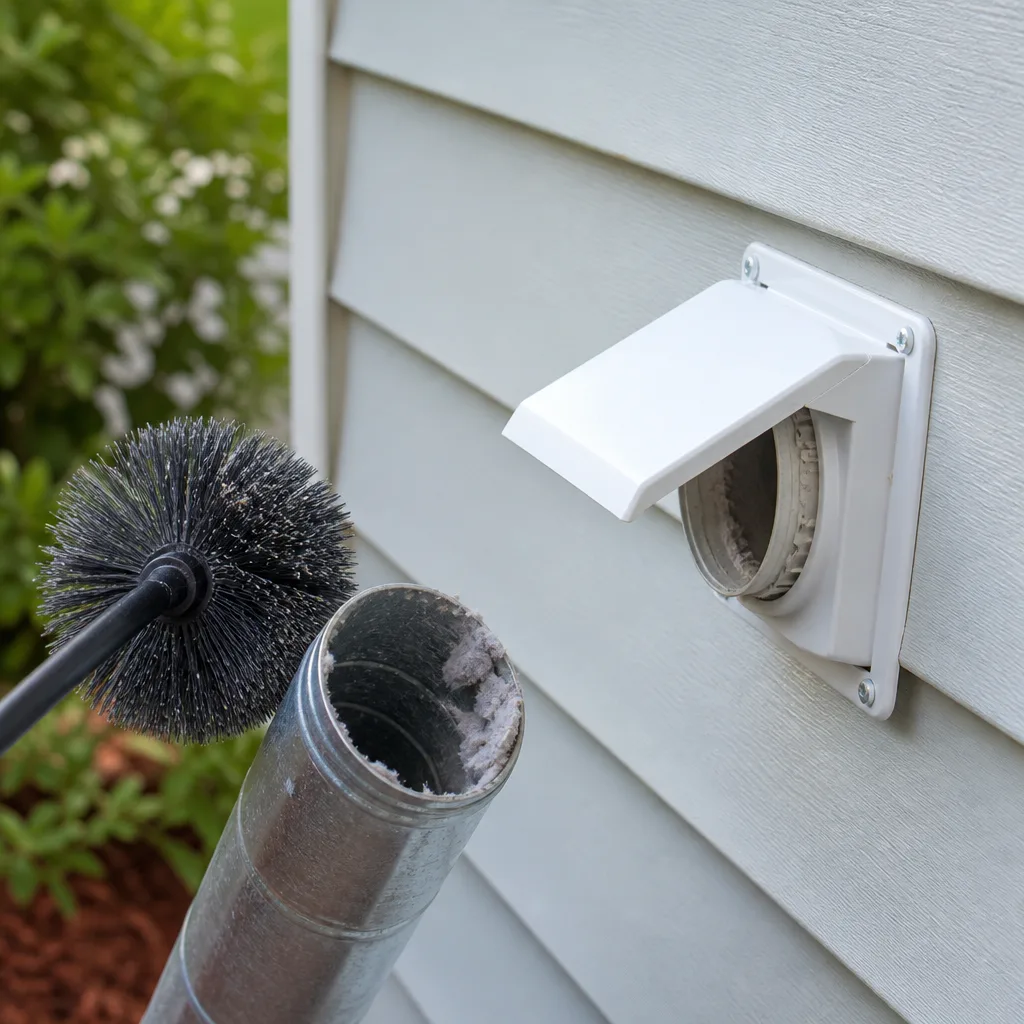 Dryer vent cleaning
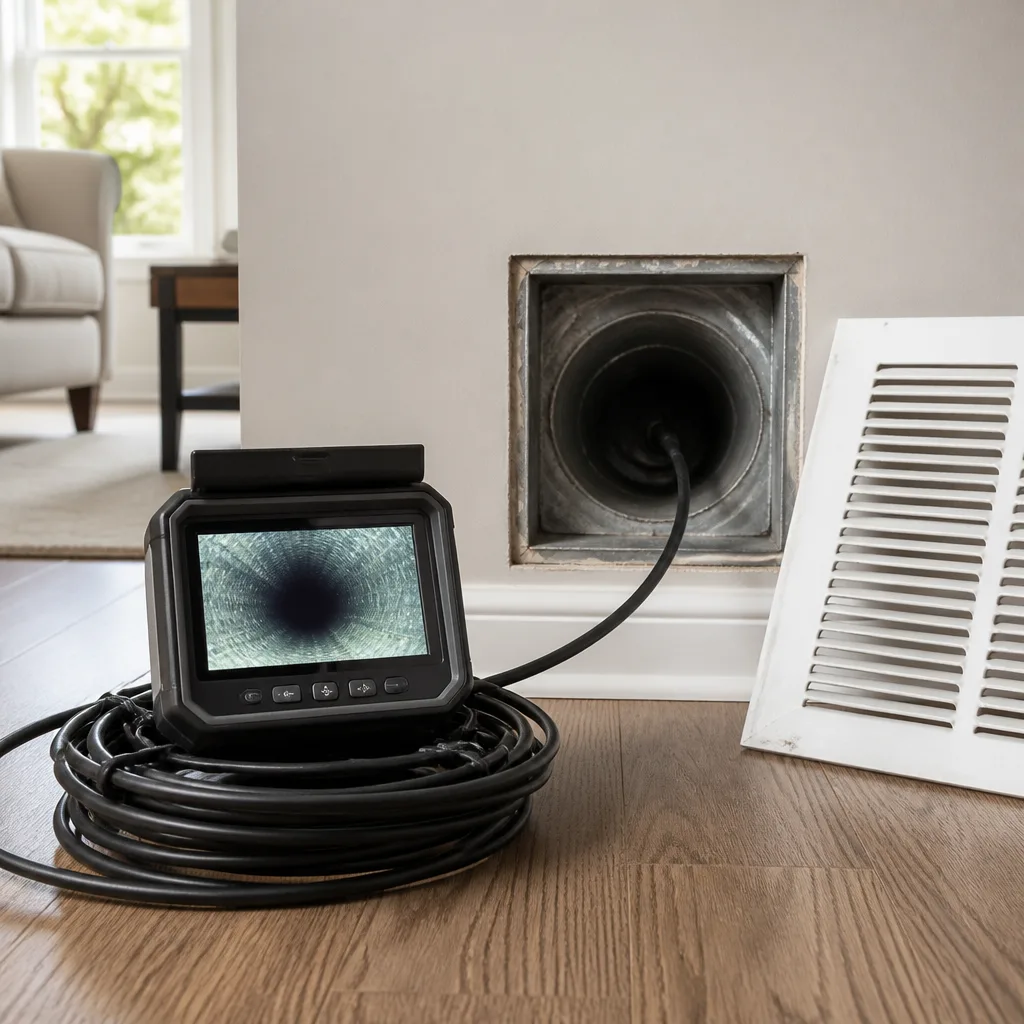 Camera inspection
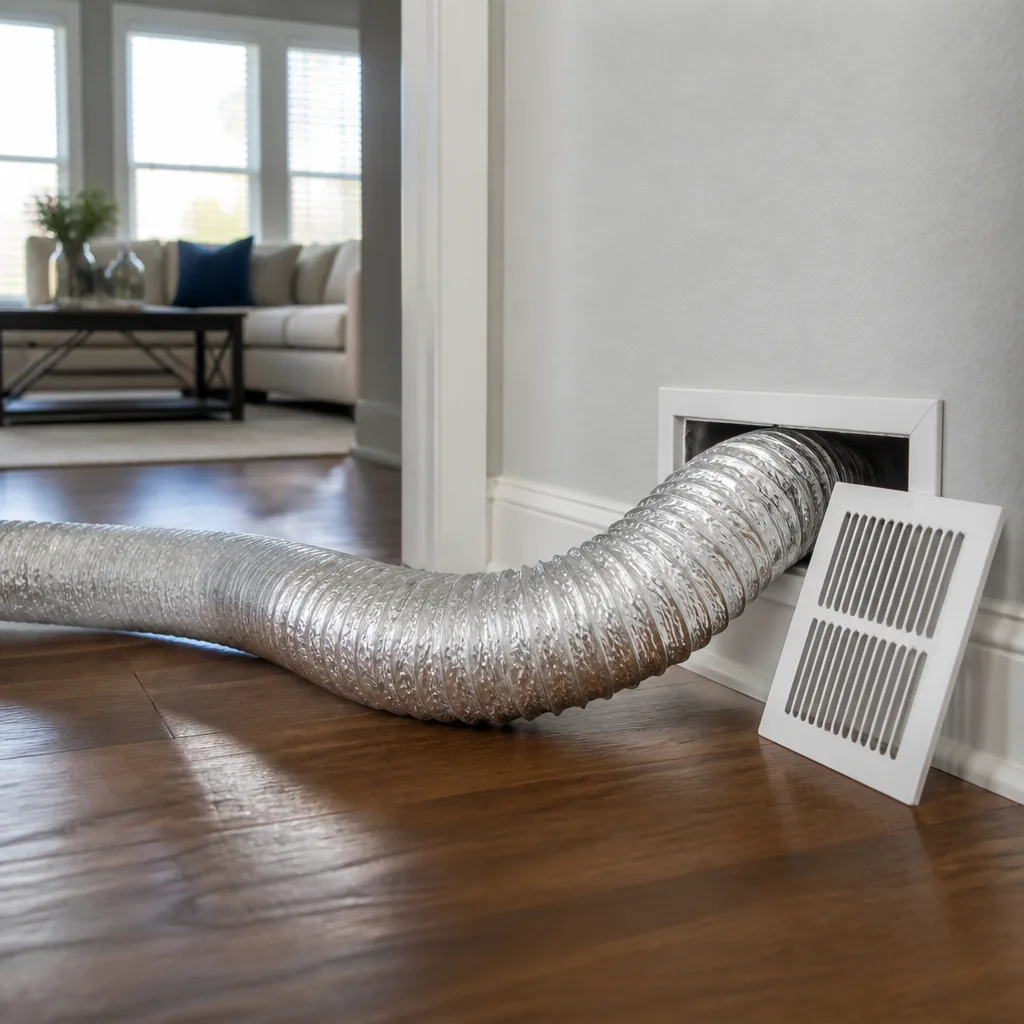 Sanitizing & deodorizing
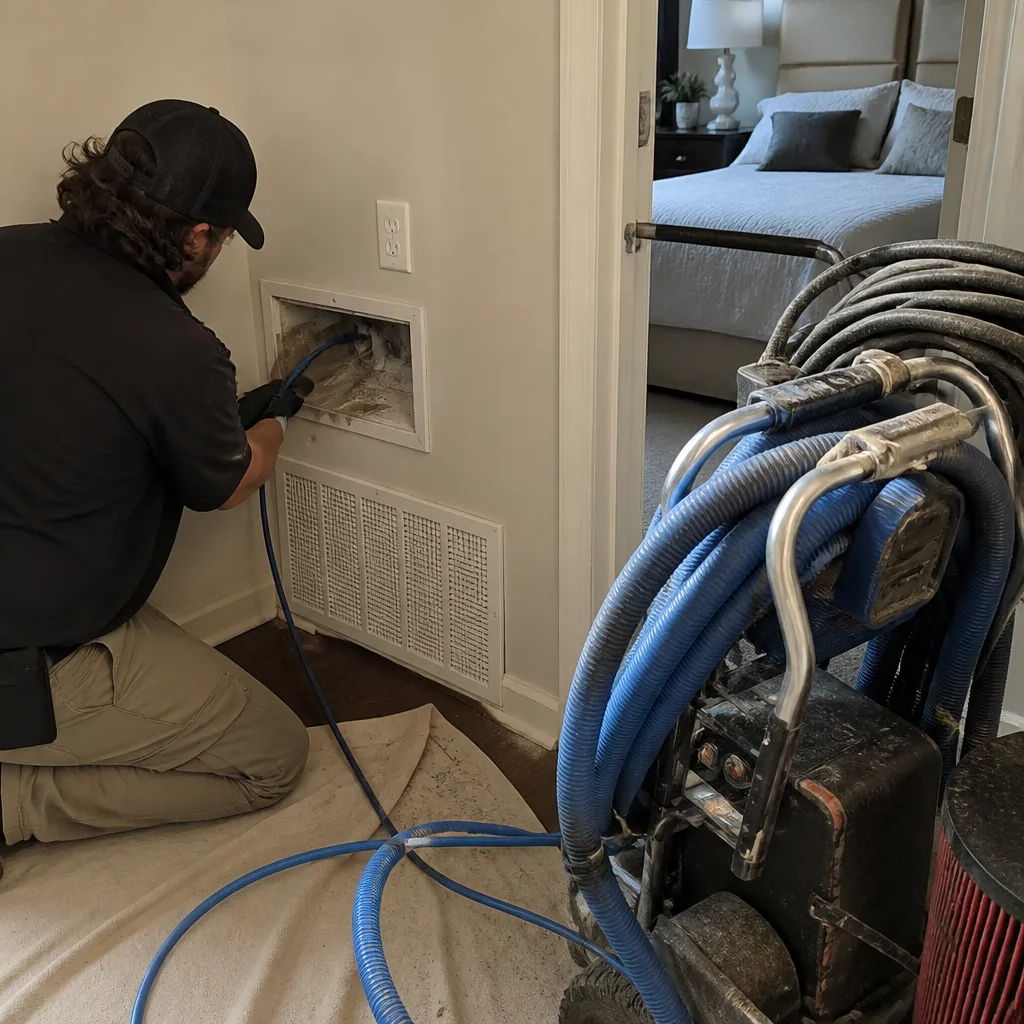
Whole-system duct and dryer vent check with before-and-after photos - you see exactly what came out of your vents
That "$99 whole-house special" is a bait ad - the real number appears once they are in your hallway, or the "clean" is a shop-vac at the register. We photograph the inside of your ducts before and after instead.
DIY vs Professional Air Duct Cleaning: The Marietta Homeowner’s Decision Guide
Here’s the reality most online guides won’t tell you: the $30 dryer-vent brush kit from the hardware store works, and you should own one. What it will not do is clean the main trunk lines of your air duct system, and that distinction is where thousands of Marietta homeowners either waste a Saturday or save several hundred dollars. This guide walks through exactly which duct-cleaning tasks belong to a homeowner with basic tools, and which ones require the equipment we roll up with. By the end, you’ll know what your time is worth, what the rental gear actually costs, and why the gap between a shop vac and professional negative-air extraction is bigger than most DIY write-ups admit. We’ve been cleaning ducts in Marietta since 2004, and we’re going to give you the honest version. If you’re ready to skip the DIY route, our Air Duct Cleaning team is standing by.
Styles & brands we work with
Quick Answer
DIY air duct cleaning is genuinely effective for register grilles, return covers, and the first few inches of accessible ductwork, but it cannot reach the main plenum or trunk lines where most debris accumulates. Professional negative-air extraction, using truck-mounted or portable high-powered vacuums with rotary brush agitation, is the only method that removes contamination through the full length of the duct system. For a typical Marietta home, professional cleaning runs $350 – $600 depending on home size and system complexity, while a thorough DIY attempt with rental equipment will run $150 – $250 and still leave the main trunk lines untouched.
Table of Contents
- What DIY Duct Cleaning Can Actually Do
- The Equipment Gap: Why a Shop Vac Can’t Do What Negative-Air Extraction Does
- The Rental Equipment Reality in Marietta
- When DIY Is the Right Call
- When Professional Cleaning Is the Only Option That Finishes the Job
- The Breakeven Calculation: When Does Professional Actually Cost Less?
- Common Mistakes to Avoid
- When to Call a Professional
- Frequently Asked Questions
- The Bottom Line
What DIY Duct Cleaning Can Actually Do
Let’s start with what a homeowner in Marietta can accomplish with a trip to the hardware store and an afternoon. These tasks are legitimate maintenance, not busywork, and doing them regularly extends the life of your system and reduces the frequency of professional cleanings. For year-round guidance on keeping up with this maintenance, see our Seasonal Air Duct Cleaning Care for Marietta: Year-Round Homeowner’s Guide.
Register and Grille Cleaning
Every supply register and return grille in your home unscrews or pops off with basic tools. Soak them in warm soapy water, scrub with a brush, dry them, and reinstall. The dust that builds up here gets pulled into the duct every time your system runs, so clean registers are a real preventative measure. This costs nothing beyond your normal cleaning supplies.
Accessible Duct Cleaning
With the grille off, you can reach into the first 6 – 12 inches of the branch duct with a vacuum hose or a damp cloth. This catches the visible dust ring that forms right at the register opening. Use the crevice tool on your household vacuum, not just the bare hose, and you’ll dislodge more from the duct wall. It’s honest maintenance, and it’s worth doing twice a year.
Flex-Duct Visual Inspection
If you have an attic or crawlspace in your Marietta home where flex duct runs are visible, you can inspect them yourself. Look for kinked runs, disconnected joints, crushed sections, or visible tears in the outer sleeve. A disconnected flex duct in a hot Georgia attic is pulling 130-degree air into your system, and that’s a problem you can spot without any special equipment. Repairing it is usually a simple matter of reattaching the collar and securing it with a zip tie, though tears in the inner liner should be handled by a professional.
Filter Replacement and Upgrades
The single most effective DIY air-quality action is filter replacement. Standard one-inch fiberglass filters from the hardware store catch large particles but do little for fine dust. Upgrading to a pleated filter with a MERV rating between 8 and 13 catches substantially more, though you should verify your system can handle the increased resistance. Brands like Aprilaire and Guardsman make whole-home filtration products that fit into standard filter slots, and these are worth considering if anyone in your Marietta home has allergies or respiratory concerns. A clean, high-quality filter extends the life of every professional cleaning you’ll eventually pay for.
Key Takeaways: What You Can Do Yourself
- Remove and wash all register grilles and return covers twice a year
- Vacuum the first 6 – 12 inches of accessible duct behind each grille
- Inspect visible flex duct in attics and crawlspaces for kinks, disconnects, and tears
- Replace filters on schedule with a quality pleated product rated MERV 8 – 13
- These tasks cost under $50 in tools and genuinely reduce system contamination
The Equipment Gap: Why a Shop Vac Can’t Do What Negative-Air Extraction Does
Now we’ll address the central question: why can’t you just tape a brush to a shop vacuum and clean the whole system? The answer comes down to airflow, reach, and the physics of debris removal.
How Professional Negative-Air Extraction Works
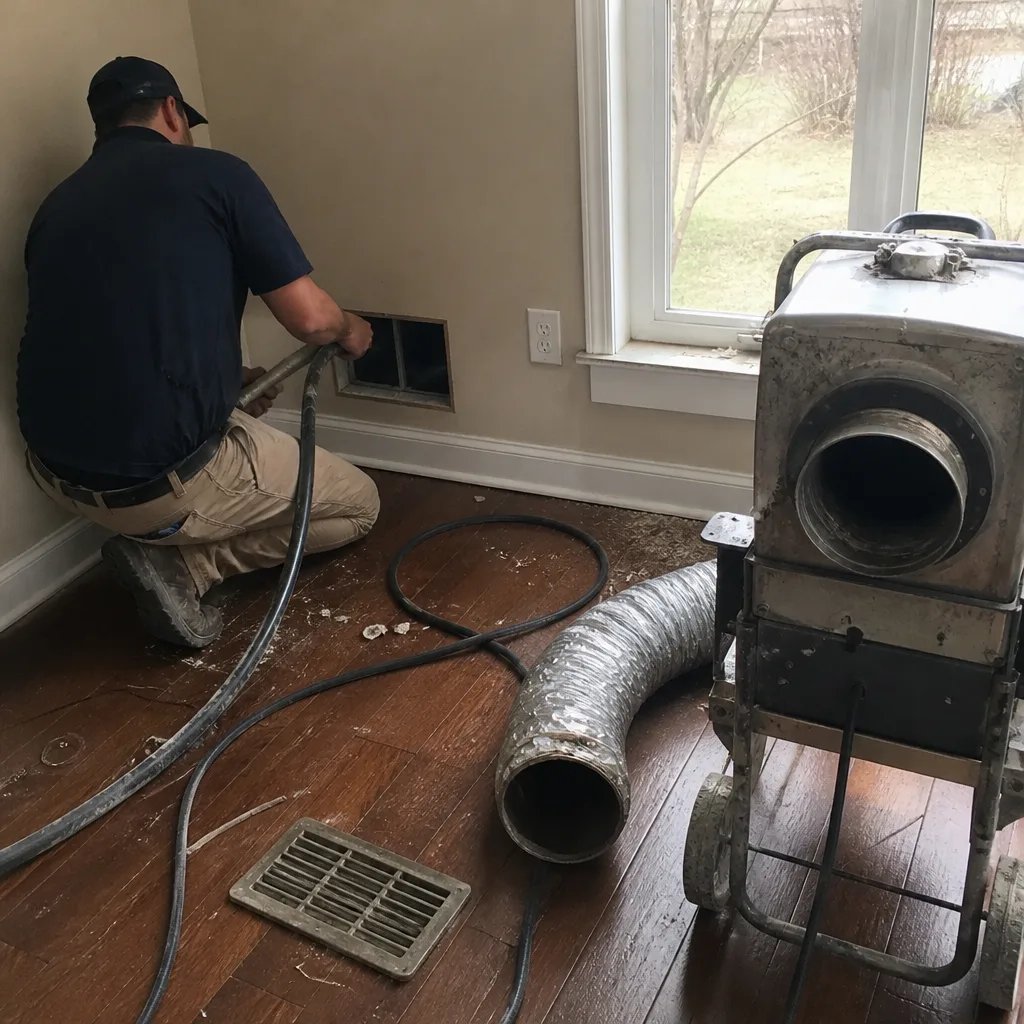
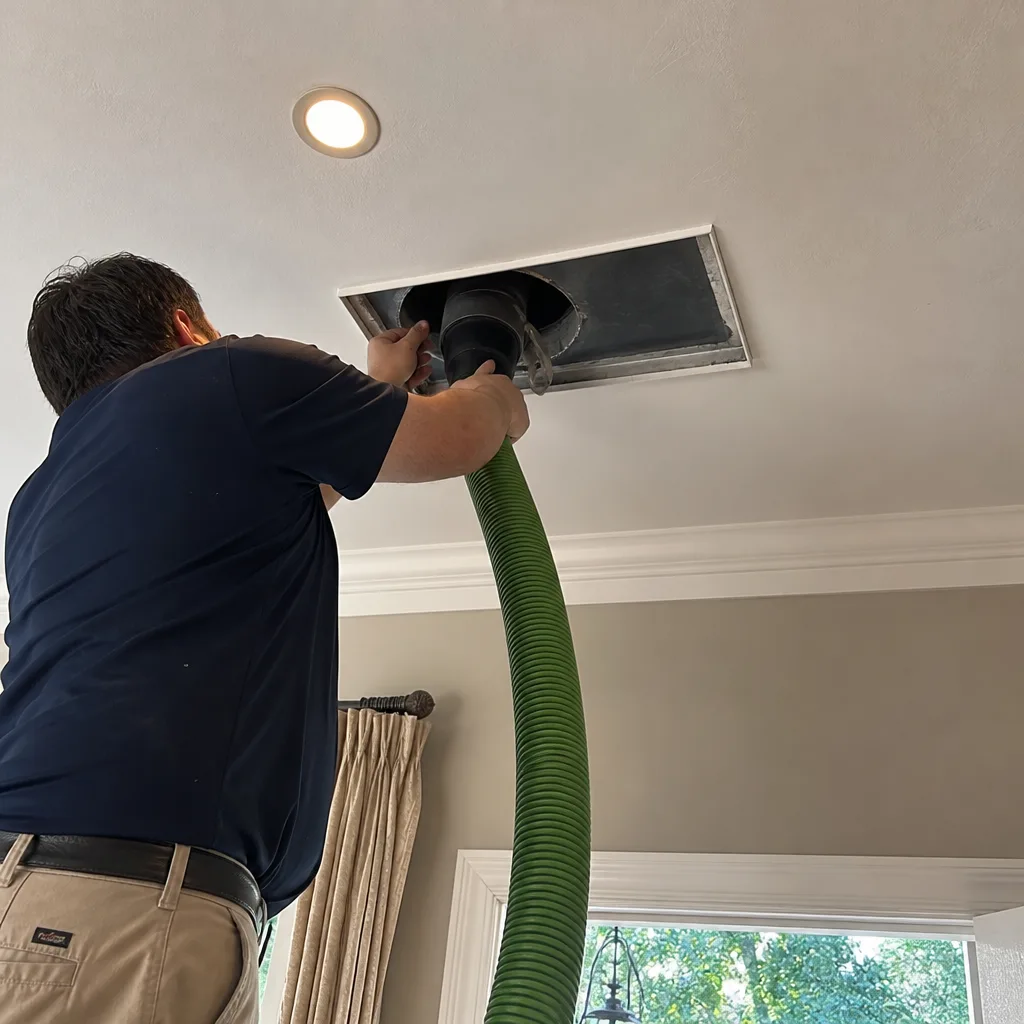
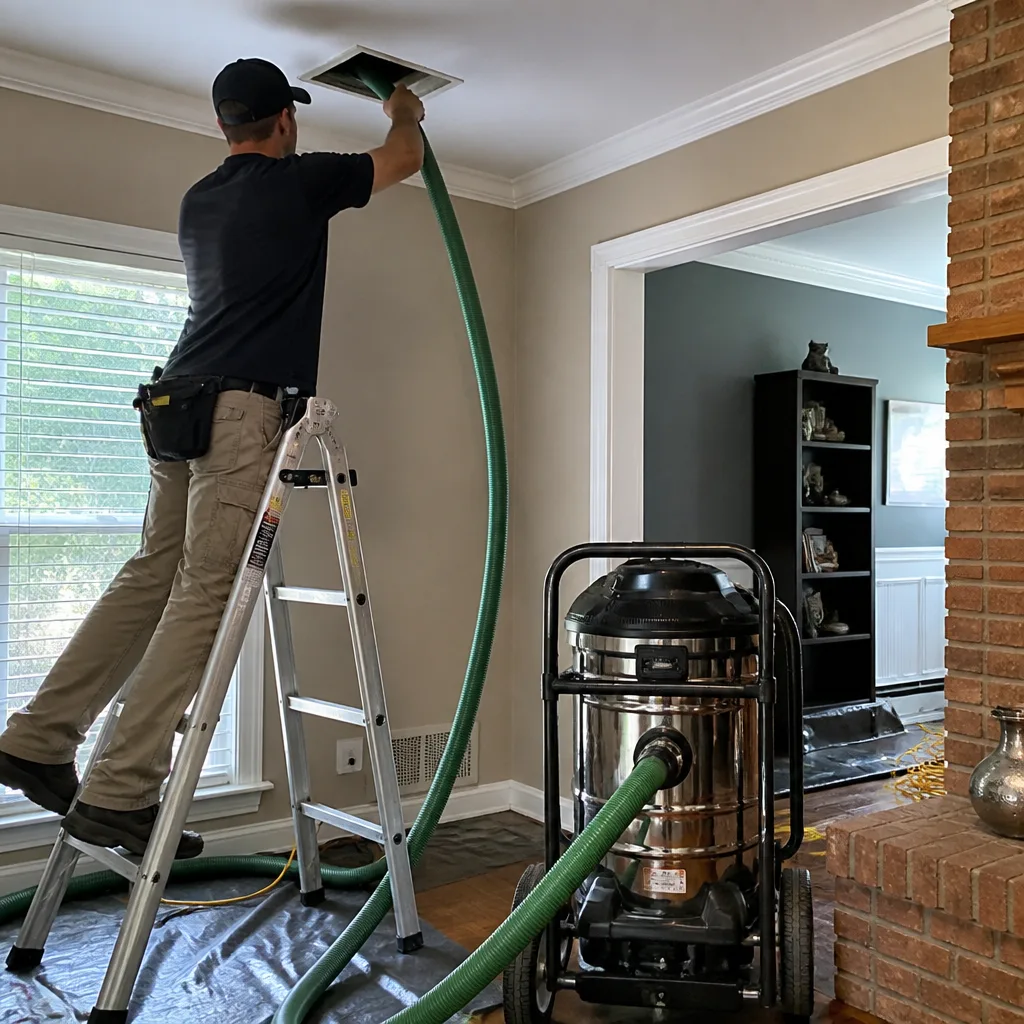
Professional duct cleaning uses a process called negative-air extraction. Here’s what that means in plain terms: a powerful vacuum unit, usually truck-mounted or a large portable unit, connects to the main trunk line at the plenum. This creates continuous, powerful suction pulling air through the entire duct system. While that suction is running, technicians insert rotating brushes into each branch line and main trunk. When used with equipment like Rotobrush systems, the brush agitates debris off the duct walls while the negative pressure carries it out of the house. Filters from Abatement Technologies capture the loosened particles before they can escape into your living space.
The key is the combination: agitation plus continuous high-volume extraction. A shop vac provides suction but no meaningful agitation inside a 20-foot duct run. A brush provides agitation but no continuous suction capable of moving loosened debris all the way to the unit. One without the other is incomplete.
The Physical Limits of a Shop Vac
A typical household shop vac moves about 100 – 150 cubic feet per minute (CFM) of air through a 1.5-inch hose. The professional units we use at Kestrel Air Duct Marietta move 2,000 – 4,000 CFM through an 8 – 10 inch hose. That’s not twice the power; it’s twenty to thirty times the airflow. This matters for three practical reasons:
- Distance: A shop vac’s suction drops dramatically after about 8 feet of hose. Most branch duct runs in a Marietta home are 15 – 30 feet from the register to the main trunk. The vacuum simply cannot pull debris that distance through a narrow hose.
- Debris types: Construction debris, drywall dust, and pet hair packed into ductwork are heavy and often damp or sticky against the duct wall. A shop vac at the register end lacks the velocity to break that bond. Rotary brush agitation against the duct wall is required, and that’s what tools like Rotobrush provide from the trunk end.
- Containment: When you loosen debris but can’t fully extract it, it stays suspended in the duct until the next blower cycle, at which point it redistributes throughout the house. A shop vac at one register pushing and pulling air creates exactly this problem. Negative-air extraction continuously removes loosened material so it never has a chance to resettle.
In our experience at Kestrel Air Duct Marietta, the homes that benefit most from professional cleaning are those where a previous owner or renter attempted a shop-vac cleaning and left behind loosened debris packed deeper into the trunk line than it was before. Half-cleaned ducts can be worse than untouched ducts because the loose top layer of dust becomes airborne while the packed layers underneath remain.
The Rental Equipment Reality in Marietta
Some Marietta homeowners decide to bridge the gap by renting HEPA-filtered negative-air machines or commercial duct cleaning equipment. Here’s the honest assessment of what that buys you.
What Rental Equipment Costs
Local equipment rental outlets in and around Marietta typically stock HEPA air scrubbers and negative-air machines designed for construction dust control. Rental rates range from $45 to $85 per day for a small HEPA negative-air unit, with a larger unit running $90 to $150 daily. Add hoses, adapters, and a brush kit and you’re looking at $150 to $250 for a weekend of work.
What these units do well: They create genuine negative pressure and HEPA filtration. If you need to control dust during a renovation or clear the air after drywall work, they’re the right tool. They do not, however, provide the agitation component that dislodges debris packed in trunk lines. You can aim a brush down a register, but you’re working blind, and you have no way to verify the trunk line is clean. It is spot cleaning with better suction, not system cleaning.
Why Rentals Miss the Main Plenum and Trunk Runs
The main plenum and trunk lines in a Marietta home typically run through the attic, crawlspace, or between floors. Accessing them properly requires cutting access ports, inserting agitation tools at the correct angles, and sealing those ports afterward. Most rental equipment does not include the agitation tools designed for trunk cleaning, and most homeowners are understandably reluctant to cut access ports into their own ductwork.
The rental path works for the branch ducts within reach of the register, and it does nothing for the main trunk lines, which is where the heaviest debris consistently accumulates. A trunk line in a Marietta attic collects dust, fiberglass particles, and construction debris for decades, and it requires tools specifically designed to reach and agitate the interior walls from the trunk access point.
When DIY Is the Right Call
There are situations where spending your weekend on duct maintenance is the correct, rational choice. Here’s when we tell Marietta homeowners to take the DIY route:
- The home is new construction or a recent full renovation. Ducts installed within the last 2 – 3 years have not had time to accumulate heavy debris. Your job is filter maintenance and register cleaning, not duct cleaning.
- You have visual confirmation the system is clean. If you remove a register and can see 2 – 3 feet down a branch duct with a flashlight, and what you see is clean galvanized metal or clean flex liner, you don’t need professional cleaning yet.
- Your primary concern is the visible register area. If dust builds up around the registers and you want to address that specific cosmetic issue, the DIY approach handles it.
- You need to inspect for an obvious problem. If you suspect a disconnected duct, a visible mold issue, or pest intrusion, visual inspection is the first step. You may find the problem yourself, and even if you don’t, your observations help any professional understand what you’re seeing.
- Your budget is genuinely constrained. Register cleaning, filter changes, and a thorough DIY inspection are meaningfully better than doing nothing, and under $50 in tools is honest maintenance.
The realistic objective of DIY duct work is to maintain a clean system, not to restore a contaminated one. If your ducts are already clean, DIY preserves them. If they are not, DIY cannot restore them.
When Professional Cleaning Is the Only Option That Finishes the Job
Here’s the other side of the decision. Certain conditions make professional extraction the only method that actually completes the job. We’ll walk through the conditions we see most often in Marietta homes.
Debris Types That Defeat DIY Methods
Construction debris and drywall dust. Homes built or renovated in the last 15 years often have drywall dust, sawdust, and even screws or nails in the ducts. This material is heavy and packs against duct walls. A shop vac cannot move it. Rotary brush agitation from a Rotobrush system can. If you’ve renovated in Marietta, you should have your ducts professionally cleaned once the project is complete, not just filter the recirculated dust.
Pet hair and dander accumulation. Homes with multiple pets, especially long-haired breeds, accumulate hair mats in the main trunk lines. These mats are dense, and they hold dander that triggers allergies. Breaking them loose requires mechanical agitation at the trunk wall combined with high-volume extraction to carry the material out. The professional-grade approach here isn’t a luxury; it’s the only method we know that removes the full mat instead of loosening the surface layer.
Mold or moisture-related contamination. In the humid Atlanta metro climate, Marietta homes can develop moisture in ducts from condensation, crawlspace humidity, or a leaking coil pan. If you see dark staining on duct walls or insulation, or you smell a musty odor that strengthens when the blower runs, this requires professional evaluation and professional-grade cleaning with HEPA filtration from Abatement Technologies to keep the spores from spreading through the house during cleaning.
Rodent or pest intrusion. Mice, squirrels, and occasionally birds nest in attic ductwork. The debris they leave behind includes droppings, nesting material, and in some cases carcasses. Removing this safely requires full containment during the process. We do not recommend any homeowner attempt this cleanup without proper respiratory protection and containment, and the risk of disease transmission makes it a job for professionals with the right equipment.
System Conditions That Require Professional Equipment
Trunk-line debris you can’t see or reach. If your registers are clean but dust blows out of them, or dust accumulates unusually fast on furniture, the debris is in the trunk and plenum. This is the most common presentation we see in Marietta homes: homeowners have cleaned everything visible and still have dust issues because the problem is centralized upstream.
Long duct runs from the blower to far registers. In larger Marietta homes with duct runs exceeding 25 feet, professional extraction is essential. The length of the run demands both the sustained suction and the mechanical agitation that only professional equipment provides, and there is no DIY workaround for distance.
Post-fire or post-flood duct contamination. Smoke residue and water damage require professional cleaning. Smoke particles are extremely fine and embed in the duct walls. Water damage introduces microbial growth risk. Both conditions warrant professional evaluation before the system runs again.
The Breakeven Calculation: When Does Professional Actually Cost Less?
Most homeowners compare a $30 brush kit to a $450 professional cleaning and conclude DIY is the value play. The real comparison includes your time, the rental equipment, the repeat attempts, and the reality that DIY leaves the trunk lines untouched. Here’s the honest math for a typical 2,000-square-foot Marietta home.
True Cost of Thorough DIY Attempt
- Hardware store supplies: brush kit, register cleaning tools, shop vac hose extension – $40 to $75
- HEPA vacuum or negative-air rental for the weekend – $90 to $150
- Your time: a full day, realistically, including attic access, register removal, cleaning, and reassembly – 8 to 10 hours
- Repeat attempt in 6 months because the dust came back – the same time and rental cost again
- Total first-year cost: $220 to $375 in equipment and rental plus 16 to 20 hours of labor
Professional Cleaning Cost for the Same Home
Most homes in Marietta run between $350 and $600 for professional duct cleaning using negative-air extraction and rotary brush agitation. The job takes 3 to 6 hours depending on system complexity, and the result is a trunk line, plenum, and branch ducts that are actually clean, not just the first foot of each branch. At Kestrel Air Duct Marietta, the written price is in your hands before a single vent is touched. There’s no per-vent pricing and no door-step revision. The Kingswell Guarantee behind each job includes a free second visit if the work falls short within the guarantee period.
The breakeven point is roughly this: for any home where debris has accumulated past the visible register area, professional cleaning costs no more than a serious DIY effort within the first year, and it delivers a result the DIY effort cannot replicate. For a clean, well-maintained system, DIY is the right ongoing choice. For a system that shows signs of accumulated contamination, professional extraction is actually the cheaper option per unit of actual clean duct.
Learn more about what professional cleaning includes on our Air Duct Cleaning in Marietta page.
Common Mistakes to Avoid
- Running the system while cleaning registers. When you remove a register and start vacuuming, the blower should be off. A running blower circulates the dust you loosen throughout the house. Turn off the thermostat fan before you start.
- Using a leaf blower into a register. This is a genuine technique we’ve seen discussed online, and it’s genuinely destructive. A leaf blower forces debris down the branch duct into the trunk line, packing it deeper into the system and often damaging the duct connections. If you’ve seen this recommended, disregard the recommendation.
- Using cleaning chemicals in the ductwork. Duct interiors should never receive cleaning chemicals, deodorizers, or spraying of any kind. The residue attracts dust and, in the case of scented products, introduces VOCs into your air stream. Cleaning is mechanical, not chemical.
- Cutting access holes without sealing them properly after. If you cut a hole in a flex duct to inspect it, you must seal it with the correct tape (UL-listed foil tape, not duct tape) or you’ve created a leak that pulls attic air into the system. Most DIY cuts end up leaking, which is why we recommend professional access for anything beyond what you can reach through the register.
- Assuming a clean register means a clean duct. The register area is where air exits at its highest velocity, which keeps it relatively clean. The trunk line is where air slows and deposits drop out. Visual inspection at the register tells you almost nothing about the state of the main trunk.
- Skipping the blower and coil cleaning while addressing ducts. In some Marietta homes, the primary dust source is a dirty blower wheel or evaporator coil, not the ducts themselves. A professional inspection should include these components, and a homeowner who cleans ducts without addressing them may see dust return quickly.
- Using a flexible dryer-vent brush in air ducts. Dryer vent brush kits are sold for cleaning dryer ducts, and they work for that narrow, rigid metal pipe. Using them in 6-inch or 8-inch branch ducts flexes the brush too much to effectively agitate the duct wall, and the rod sections can catch on duct seams and disconnect joints. It is the wrong tool for the wrong pipe.
If your dryer vent is the concern, the right DIY kit is a legitimate purchase, and we cover dryer vent cleaning separately on our Dryer Vent Cleaning in Marietta page.
When to Call a Professional
Call a professional when you see dust blowing from registers after cleaning them, when you smell musty air that strengthens with the blower, when you have renovation debris or pet-hair accumulation, when you suspect mold or pest intrusion, or when your home has not had a professional duct cleaning in more than 5 years and you cannot confirm the trunk lines are clean. These are conditions where DIY effort cannot reach the source of the contamination, and the honest move is professional extraction.
Kestrel Air Duct Marietta offers free estimates in Marietta. We’ll inspect the system, show you what we find, and give you a written price before any work begins. Call (762) 533-6494 to schedule a time. No door-step price changes, no per-vent add-ons, and our 365-Day Done Right Promise is printed on every job document.
Frequently Asked Questions
Most homes in Marietta run between $350 and $600 for professional duct cleaning, with the final price depending on home size, number of returns, system accessibility, and contamination level. The price at Kestrel Air Duct Marietta is written before work begins and does not change at the door. Our equipment runs on the Kestrel Air Duct Marietta home service standard, which means no per-vent pricing and no surprise add-ons. Call (762) 533-6494 for an exact quote on your home, and the estimate is free.
You can clean the first 6 – 12 inches of each branch duct with a shop vac and crevice tool, which is useful maintenance, but a shop vac cannot reach the main trunk line or plenum where most debris accumulates. The physical limitation is airflow: a shop vac moves about 100 – 150 CFM through a narrow hose, while professional negative-air equipment moves 2,000 – 4,000 CFM through an 8 – 10 inch hose. That difference determines whether debris is actually extracted or just loosened and redistributed.
Most homes benefit from professional duct cleaning every 3 – 5 years, with shorter intervals for homes with multiple pets, allergy sufferers, recent renovation work, or smokers. Homes near construction areas in Marietta may also need more frequent cleaning. If you cannot remember the last cleaning, or you moved into a home of unknown maintenance history, a professional inspection is the right first step.
Negative-air extraction is the professional duct cleaning method that connects a high-powered vacuum to the main trunk line, creating continuous suction through the whole system while rotating brushes agitate debris off the duct walls. That combination, suction at the trunk plus agitation at the duct wall, is what moves packed debris out of the house. It differs from a shop vac at the register, which provides suction only at the visible end of the duct and leaves most debris in place.
Cheaper duct cleaning quotes usually reflect a per-vent or single-room price that becomes a much larger invoice once the technician sees the system, or they reflect a brush-only cleaning that does not include negative-air extraction. A legitimate whole-system cleaning in Marietta costs $350 – $600 depending on home specifics. At Kestrel Air Duct Marietta, the price is written before work starts, it covers the entire system, and the 365-Day Done Right Promise means we return and make it right at no charge if the work falls short within the guarantee period.
You should be shown before-and-after photos of the duct interior, which professional equipment captures during the cleaning process. At Kestrel Air Duct Marietta, our technicians document the trunk line and representative branch ducts with photos you can see for yourself. The visual proof is the difference between a cleaning that happened and a cleaning that was described. Every job also includes our written guarantee, so if the result falls short, we come back and correct it without additional cost.
The Bottom Line
The DIY versus professional duct cleaning decision comes down to one question: where is the debris? If it’s at the register, the DIY path is effective and worth your time. If it’s in the trunk, the plenum, or packed along 20 feet of branch duct, professional negative-air extraction is the only method that reaches it. For most Marietta homes with years of accumulated dust, pet hair, and renovation debris, the breakeven math favors professional cleaning, especially when you account for the rental equipment and repeat attempts that DIY demands. Maintain a clean system yourself, restore a dirty system with the right equipment, and never pay for a cleaning that doesn’t include written proof that the work was done. Want more guides & resources? Our blog covers everything Marietta homeowners need to know.
Air Duct Cleaning in Marietta | Dryer Vent Cleaning in Marietta
To schedule a free estimate or ask a question, call Kestrel Air Duct Marietta at (762) 533-6494. You’ll speak with a live person, we’ll give you a specific time window, and we’ll put the price in writing before any work begins.
Written by Dale Whitmore, Owner at Kestrel Air Duct Marietta, serving Marietta since 2004.
See the difference
 Before
 After
After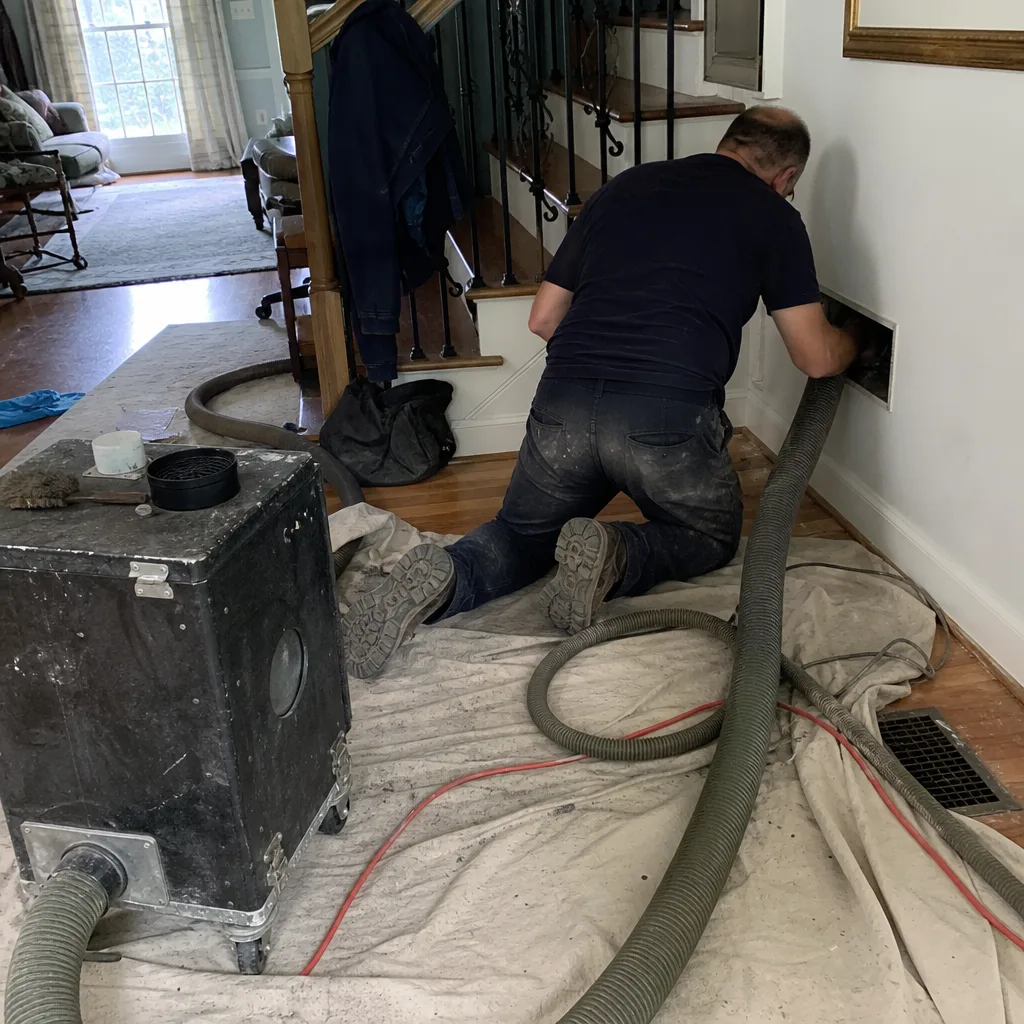 Before
 After
After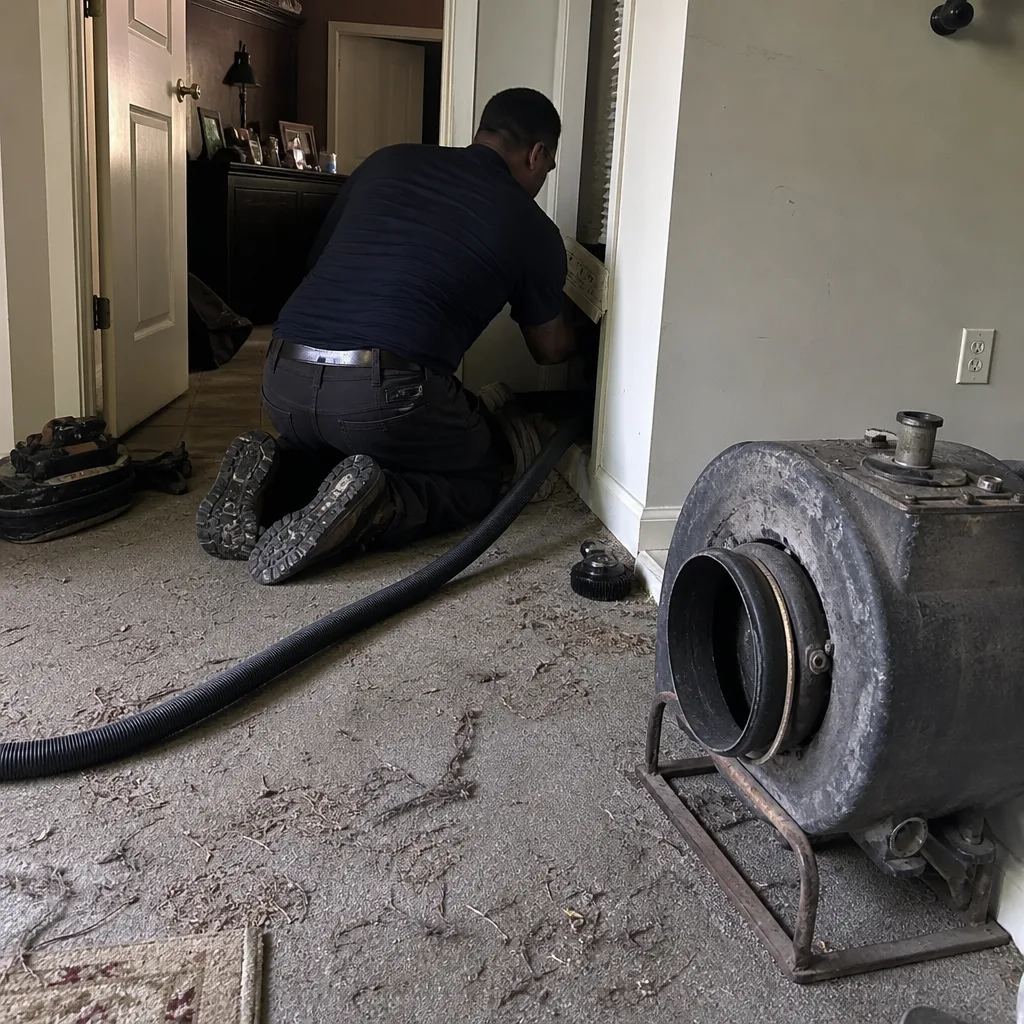 Before
 After
After